Tabanus sulcifrons
Macquart, 1855
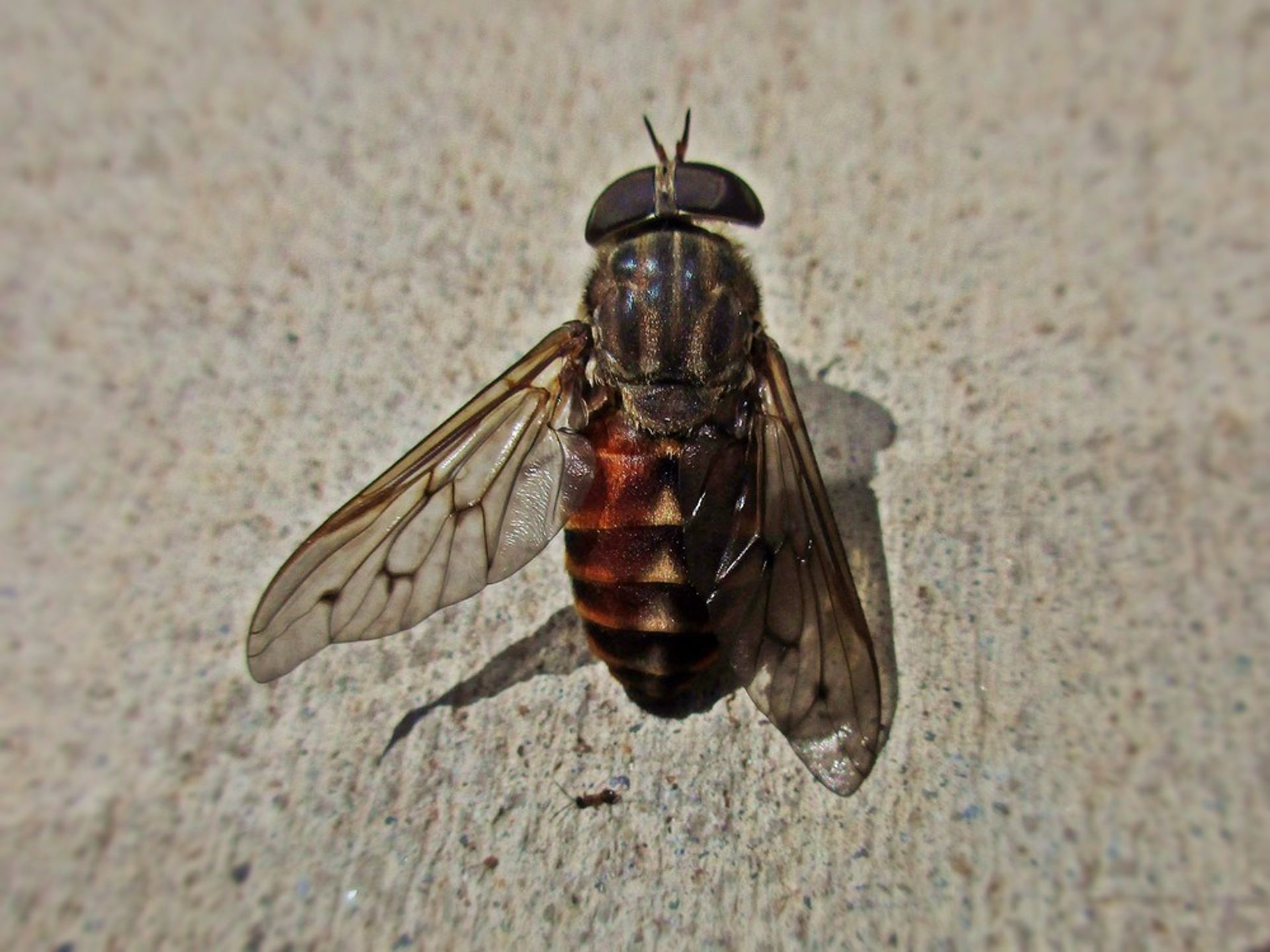
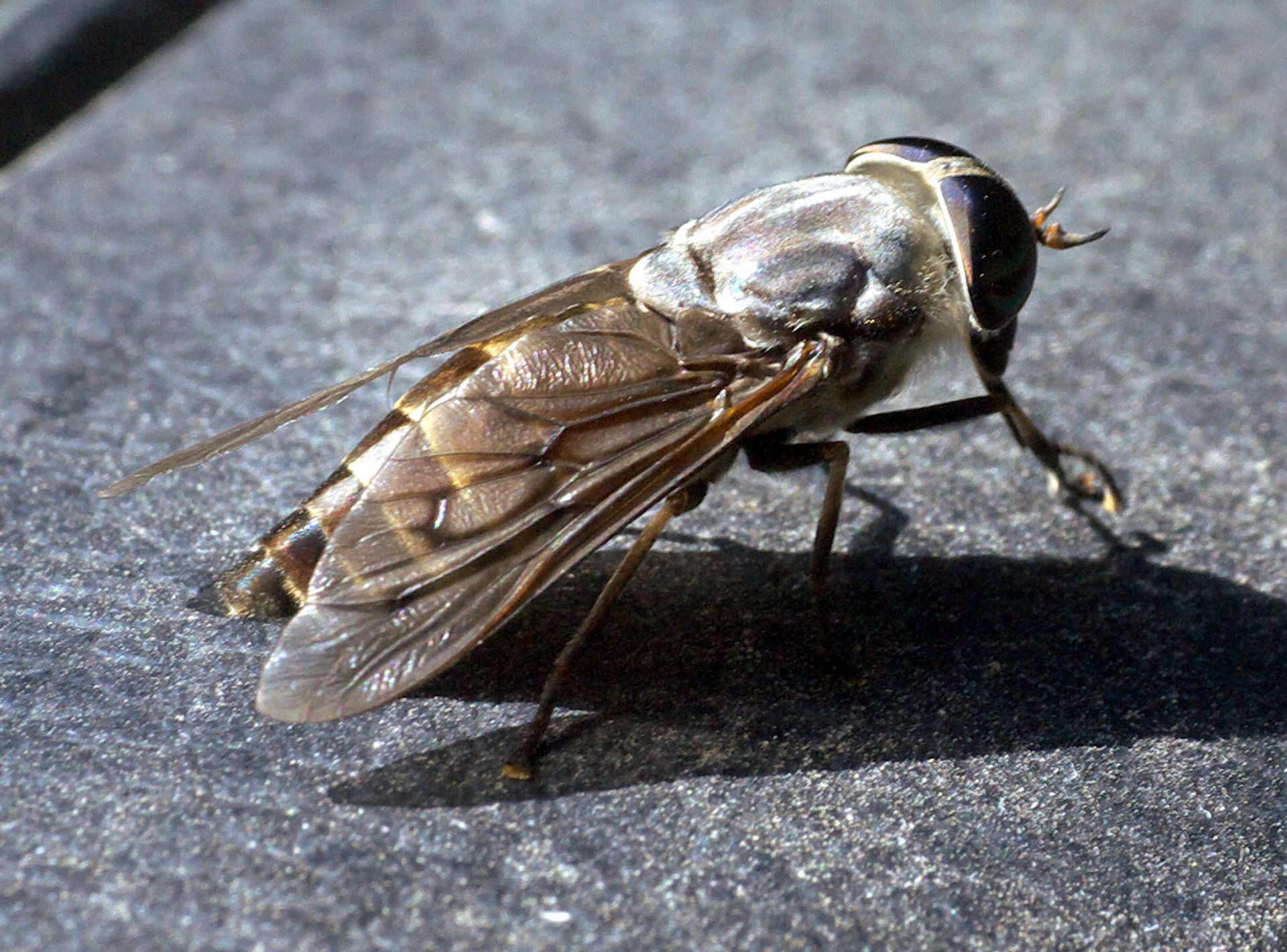
Tabanus sulcifrons is a of horse fly in the Tabanidae, widely distributed throughout the eastern half of the United States and adjacent regions of southern Canada. Larvae develop in wet, muddy margins of ponds and streams in saturated soil. The species has two recognized : T. s. sulcifrons and T. s. variegatus.
Pronunciation
How to pronounce Tabanus sulcifrons: //təˈbeɪnəs ˈsʌlsɪˌfrɒnz//
These audio files are automatically generated. While they are not always 100% accurate, they are a good starting point.
Identification
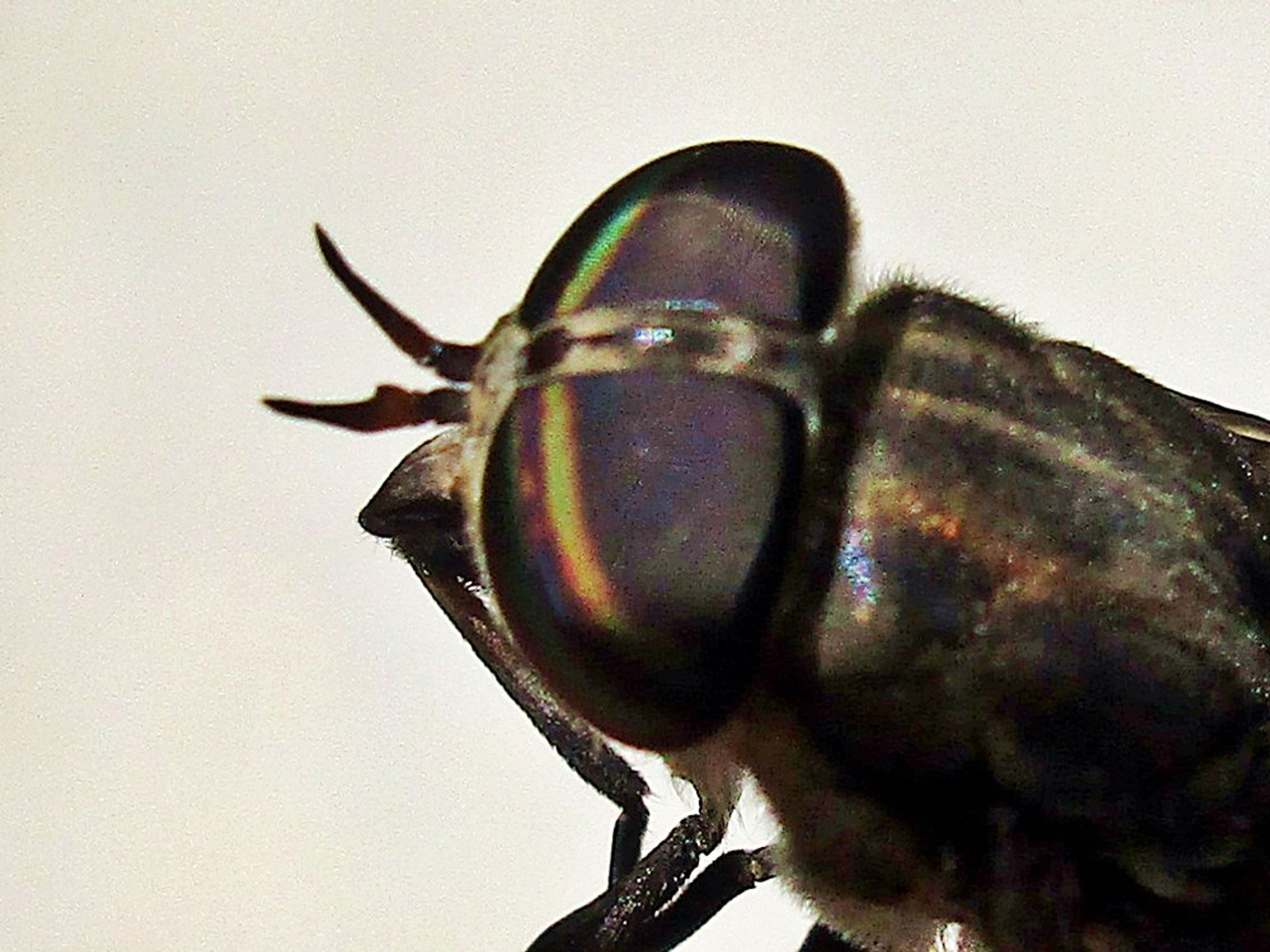
Specific diagnostic features for distinguishing T. sulcifrons from similar Tabanus are not documented in available sources. As with many Tabanus species, likely possess the characteristic large that meet at the top of the in males and are separated in females, along with the robust body form typical of horse flies.
Images
Habitat
Larvae inhabit wet, muddy margins of ponds and streams, typically found 2-4 inches below the surface in saturated soil. associations are not specifically documented.
Distribution
Eastern half of the United States and adjacent regions of southern Canada. Specific state/province records include Oklahoma and Vermont.
Seasonality
Larvae present September through April, with peak abundance in winter months. seasonal activity patterns are not documented in available sources.
Life Cycle
Larval development occurs in saturated soil at margins of aquatic . Larvae have been collected from September through April, with peak abundance in winter months, suggesting a with larval development during cooler seasons. Specific details on , timing, and time are not documented.
Human Relevance
As a member of the horse fly Tabanidae, likely possess biting mouthparts and may feed on mammalian blood, though specific documentation of T. sulcifrons as a pest or is not available. The has been subject to larval studies in Oklahoma, suggesting potential relevance to pest management in agricultural or recreational areas.
More Details
Subspecies
Two are recognized: Tabanus sulcifrons sulcifrons Macquart, 1855 and Tabanus sulcifrons variegatus Fabricius, 1805.
Taxonomic Note
Authorship is sometimes cited as Osten Sacken, 1878 in some sources, though Macquart, 1855 is the accepted authority per GBIF and NCBI.