
Tabanus fairchildi
Stone, 1938
Fairchild's horse fly
Tabanus fairchildi, known as Fairchild's , is a of biting fly in the Tabanidae. The species was described by Stone in 1938. Like other horse flies, are likely to be robust, medium to large-sized flies with large and biting mouthparts adapted for blood-feeding. The species is recorded from Canada and the United States, though specific details about its and remain poorly documented in the available literature.
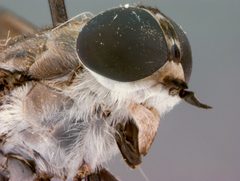
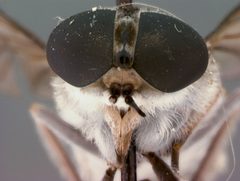
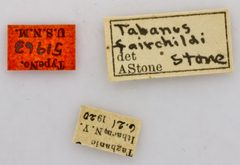
Pronunciation
How to pronounce Tabanus fairchildi: /tæˈbeɪnəs ˈfɛərˌtʃaɪldi/
These audio files are automatically generated. While they are not always 100% accurate, they are a good starting point.
Images
Distribution
Recorded from Canada and the United States. Specific provincial or state records are not detailed in available sources.
Human Relevance
As a member of the Tabanus, this likely shares the 's tendency for females to bite humans and other mammals for blood meals, potentially causing annoyance and serving as a mechanical for transmission. However, specific records of human interaction for T. fairchildi are not documented.
More Details
Taxonomic Status
The is accepted as valid in GBIF and NCBI, though Catalogue of Life lists it with status 'synonym'—this may reflect ongoing taxonomic revision or database differences rather than formal synonymization.
Etymology
The specific epithet 'fairchildi' honors someone with the surname Fairchild, likely an entomologist or collector associated with the .