
Stonemyia rasa
(Loew, 1869)
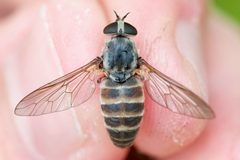
Stonemyia rasa is a of horse fly in the Tabanidae, first described by Loew in 1869. It has been documented in the northeastern United States, particularly Connecticut and Vermont. Research indicates it exhibits seasonal activity patterns, and it belongs to a whose species have been observed visiting flowers in New England.
Pronunciation
How to pronounce Stonemyia rasa: //stoʊˈnɛmiə ˈrɑːsə//
These audio files are automatically generated. While they are not always 100% accurate, they are a good starting point.
Images
Distribution
Northeastern United States; specifically recorded from Connecticut and Vermont. Distribution records also indicate presence in the United States broadly.
Seasonality
Exhibits seasonal activity patterns in Connecticut, as documented in field studies. Specific months of peak activity not detailed in available sources.
Behavior
Seasonal activity has been documented in Connecticut . Floral visitation has been observed in Stonemyia in New England, though specific floral associations for S. rasa are not separately detailed.
Similar Taxa
- Atylotus duplexSympatric in Connecticut; studied alongside S. rasa in seasonal activity research. Both are Tabanidae but belong to different .
- Atylotus thoracicusSympatric in Connecticut; studied alongside S. rasa in seasonal activity research. Both are Tabanidae but belong to different .
More Details
Taxonomic history
Originally described as Pangonia rasa by Loew in 1869, later transferred to Stonemyia.
Sources and further reading
- BugGuide
- Wikipedia
- GBIF taxonomy match
- NCBI Taxonomy
- Catalogue of Life
- What's a Nematode? Just Ask Lauren Camp | Bug Squad
- Seasonal Flight Activity of Atylotus duplex (Walker), Atylotus thoracicus (Hine), and Stonemyia rasa (Loew) (Diptera: Tabanidae) in Connecticut, with Floral Hosts of Stonemyia Species in New England