Chrysops niger
Macquart, 1838
Black Deer Fly
Pronunciation
How to pronounce Chrysops niger: /ˈkrɪsɒps ˈniːɡər/
These audio files are automatically generated. While they are not always 100% accurate, they are a good starting point.
Identification
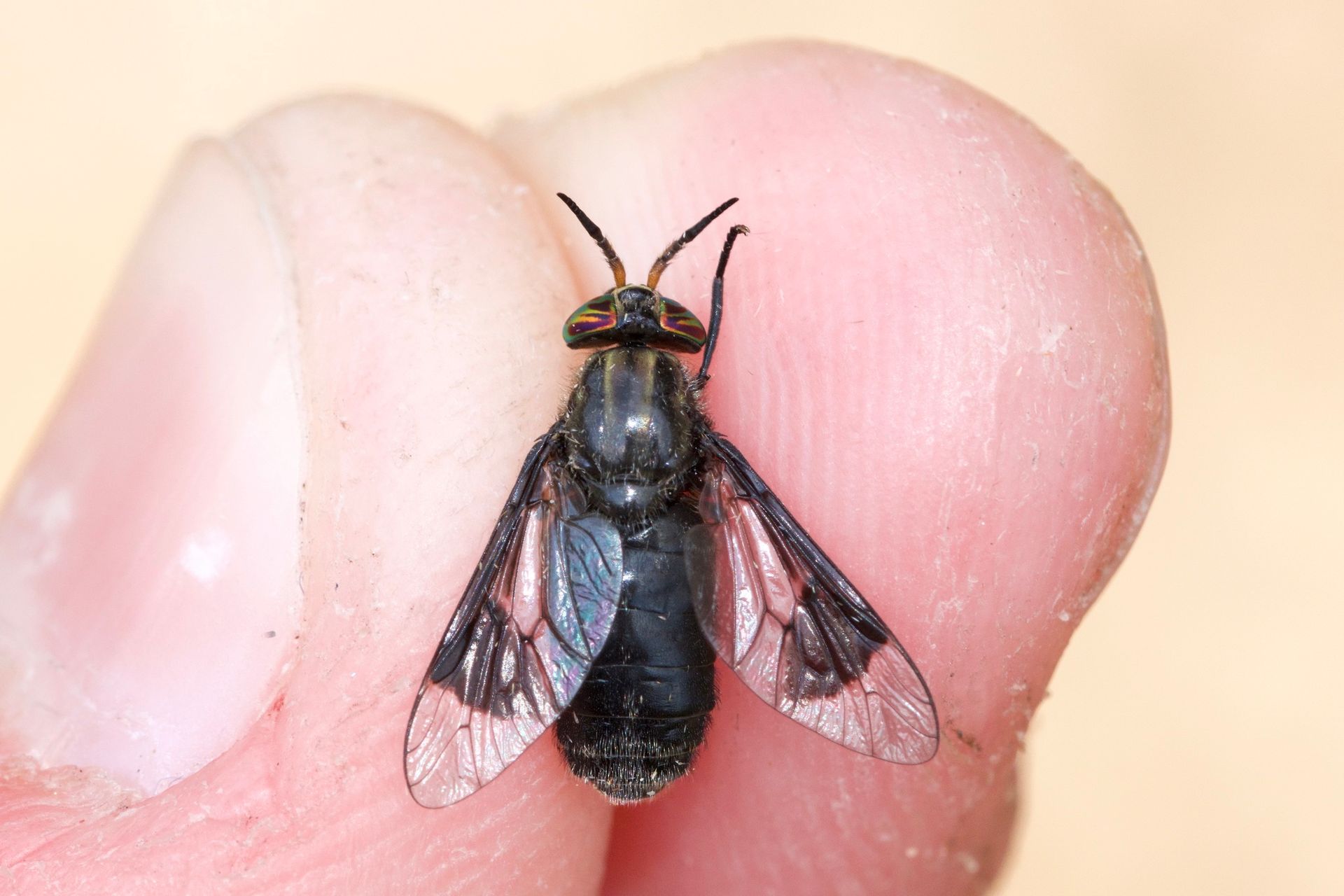
The black can be distinguished from other Chrysops by its predominantly black body coloration combined with black-barred wings. Many deer flies have yellow or orange markings on the body; C. niger lacks these. The wing pattern of dark bars is diagnostic within its range. Similar species with dark bodies typically show different wing patterns or body markings.
Images
Appearance
measure 8–10.5 mm in length. The body is mostly black with scattered white hairs. Wings are transparent with distinct black bars. in structure is typical for the , with males having eyes and females dichoptic eyes, though specific details for this are not documented in available sources.
Habitat
Associated with marshy areas and wetlands. Larvae inhabit damp soil with high water content.
Distribution
Eastern United States and Canada. Specific records include Vermont.
Seasonality
are active from May to September.
Diet
females are blood-feeders; males and specific associations for C. niger are not documented. Larvae feed on organic matter in damp soil.
Life Cycle
Complete with , larva, pupa, and stages. Larvae are hydrobionts, inhabiting areas of high water content in damp soil where they feed on organic matter. Duration of developmental stages not documented for this .
Behavior
are active diurnally during the season. Females bite humans and likely other mammals for blood meals, as is characteristic of the , though specific records for C. niger are not documented. Adults are associated with marsh .
Ecological Role
Larvae contribute to decomposition in wetland soils. females function as blood-feeding of vertebrates. Specific ecological impacts not documented.
Human Relevance
females bite humans, causing painful welts. The is a nuisance pest in marshy recreational areas during summer months. No documented transmission for this species, though deer flies in general can mechanically transmit some .
Similar Taxa
- Other Chrysops speciesMany deer flies have yellow or orange body markings and different wing patterns; C. niger is distinguished by its mostly black body with white hairs and black-barred wings
More Details
Larval biology
Larvae are termed hydrobionts due to their requirement for high soil moisture content.
Sources and further reading
- BugGuide
- Wikipedia
- GBIF taxonomy match
- iNaturalist taxon
- NCBI Taxonomy
- Catalogue of Life
- Grasshoppers of Colorado
- Not Just Maize: Africa's Fall Armyworm Crisis Threatens Sorghum, Other Crops, Too
- Eavesdropping on Soybean Weevils: Scientists Detect Subtle Acoustic Signals
- Citizen scientists discover new plant species in the Cape Floral Kingdom | Blog
- How One Entomologist Rears Insects to Support Research and Development
- Bug Eric: What the Insects Have Taught Me