
Rhagio tringarius
(Linnaeus, 1758)
Marsh Snipefly, Marsh Snipe Fly
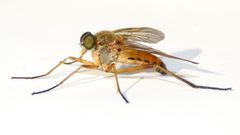
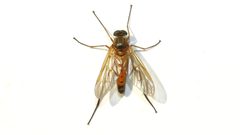
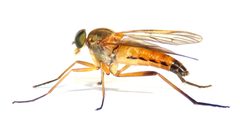
Rhagio tringarius, commonly known as the marsh snipefly, is a of fly in the Rhagionidae. measure 8–14 mm in length with yellow-orange and long slender legs. The species is native to Europe but has been recorded in the Nearctic region, representing a first record for North America. Larvae are predatory, dwelling in soil and litter where they hunt small beetles and earthworms. Adults are active from May to September and are typically found resting on leaves in vegetated .
Pronunciation
How to pronounce Rhagio tringarius: /ˈræɡioʊ trɪŋˈɡɛəriəs/
These audio files are automatically generated. While they are not always 100% accurate, they are a good starting point.
Identification
Distinguished from other Rhagio by the absence of a dark wing stigma, which is present in most . The yellow-orange with black triangles and black terminal tergites provides additional diagnostic characters. The long, slender yellow-orange legs are also characteristic. In North America, it may be confused with native Rhagio species, but the clear wings and specific abdominal patterning help separate it.
Images
Habitat
Found in wet meadows, hedgerows, woods, and areas with rich vegetation. Larval consists of soil, leaf litter, and detritus where they actively hunt prey.
Distribution
Native to Europe, where it occurs in most European countries. First recorded in the Nearctic region (eastern North America) as part of a documented range expansion.
Seasonality
occur from May to September.
Diet
Larvae are predatory, feeding on small beetles and earthworms. feeding habits are not conclusively documented.
Life Cycle
Larvae develop in soil, litter, and detritus. emerge and are active during summer months. Specific details of and stages are not documented in available sources.
Behavior
typically rest on leaves. Larvae are active in soil and litter. Adults are not known to be aggressive and do not bite humans.
Ecological Role
Larvae function as in soil and litter , contributing to regulation of small including beetles and earthworms.
Human Relevance
No significant direct interactions with humans. Not known to be a pest, , or beneficial in agricultural contexts. Represents a documented case of a European dipteran establishing in North America.
Similar Taxa
- Other Rhagio speciesMost Rhagio possess a dark wing stigma, which R. tringarius lacks. Additionally, the specific pattern of black triangles on a yellow-orange helps distinguish R. tringarius from .
- Chrysopilus ornatusAnother rhagionid with colorful appearance, but C. ornatus has metallic gold and distinct wing venation, and is native to North America rather than introduced.
More Details
First Nearctic record
This European was first recorded in the Nearctic region as part of a taxonomic revision of eastern North American Rhagio species, representing a documented case of transatlantic or introduction.