
Sphaerophoria sulphuripes
(Thomson, 1869)
Forked Globetail
Sphaerophoria sulphuripes, commonly known as the forked globetail, is a of syrphid fly native to western North America. As a member of the hover fly Syrphidae, it is frequently observed visiting flowers for nectar and pollen. The species is part of a known for its distinctive globular shape. are often mistaken for bees or due to their yellow and black coloration, a form of protective mimicry common in this family.
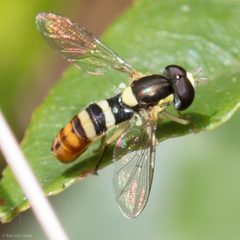
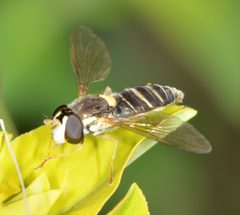
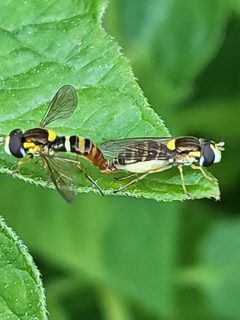
Pronunciation
How to pronounce Sphaerophoria sulphuripes: /sfɛˌɹɒfəˈɹiːə ˌsʌlˈfjʊəɹɪpiːz/
These audio files are automatically generated. While they are not always 100% accurate, they are a good starting point.
Identification
The specific epithet "sulphuripes" refers to yellowish legs, which may aid in distinguishing this from . Identification to species level within Sphaerophoria typically requires examination of male genitalia, particularly the shape of the surstyli (the "forked" structure referenced in the ). Females are generally more difficult to identify to species and may require expert examination.
Images
Distribution
Native to western North America.
Diet
feed on nectar and pollen. Larvae are , though specific prey records for this are not documented in available sources.
Life Cycle
Complete with , larva, pupa, and stages. Specific developmental details for this are not documented.
Behavior
hover over flowers before landing, a characteristic of syrphid flies. They are important . Larvae are predatory on soft-bodied insects.
Ecological Role
function as . Larvae contribute to of pest insects such as aphids.
Human Relevance
are beneficial in gardens and agricultural settings. Larvae provide natural pest control services.
Similar Taxa
- Sphaerophoria philanthusShares the and general yellow-and-black syrphid appearance; distinguished by specific morphological features of male genitalia.
- Other Sphaerophoria speciesClosely related with overlapping ranges and similar coloration; require expert examination for reliable identification.
- Honey bees (Apis mellifera)Frequently mistaken for bees due to coloration; distinguished by single pair of wings (vs. two in bees), hovering , large , short , and absence of pollen-carrying structures.
Misconceptions
are often mistaken for bees or due to their yellow and black striped appearance. This is a case of , but syrphid flies have only one pair of wings ( Diptera), hover in , and lack the and stingers of bees.
More Details
Taxonomic Note
The specific epithet "sulphuripes" (sulphur + pes/pedis, foot) refers to the yellowish coloration of the legs, a potentially useful field mark.