Sphaerophoria pyrrhina
Bigot, 1884
Violaceous Globetail
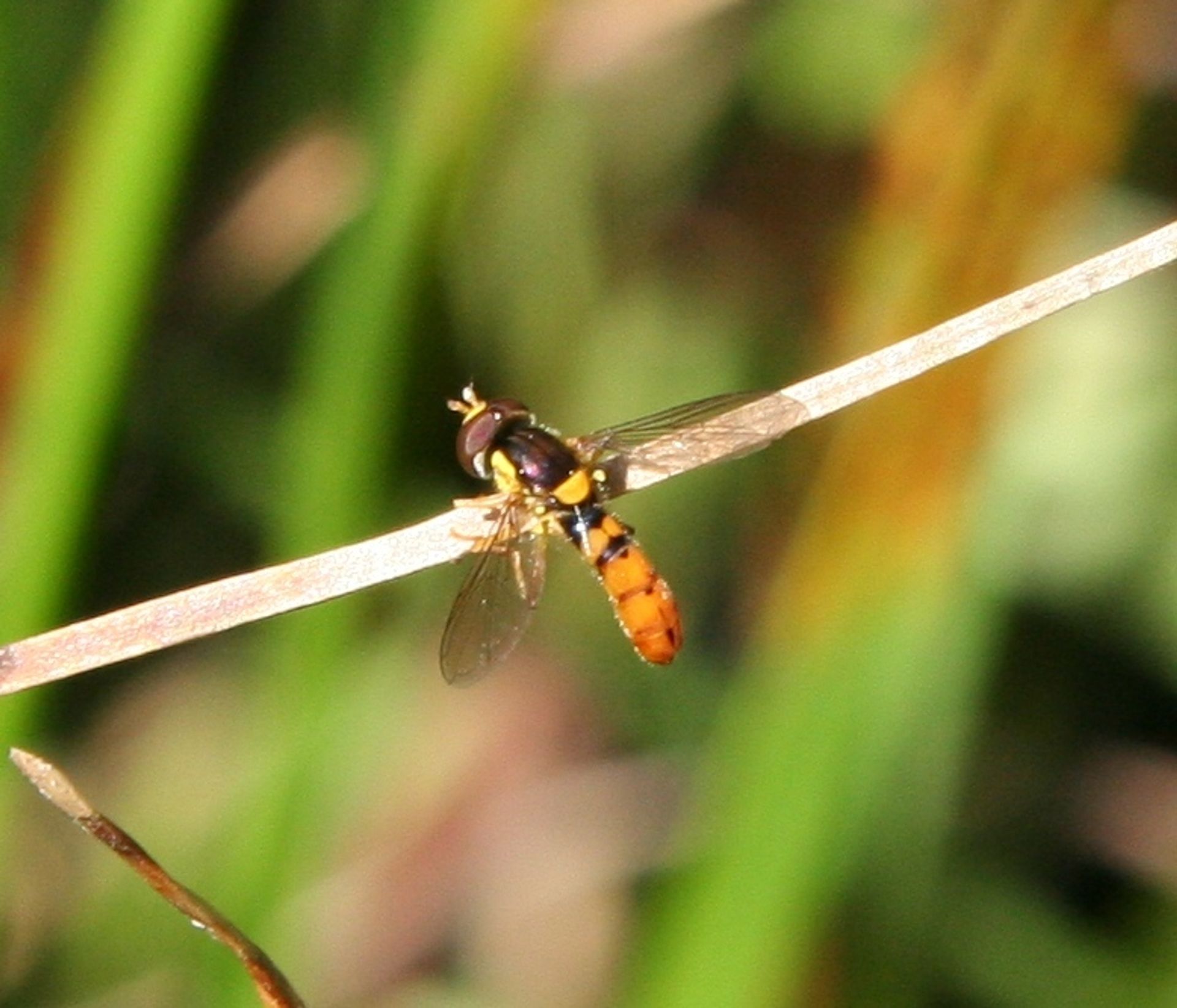
Sphaerophoria pyrrhina is a of syrphid fly, commonly known as the Violaceous Globetail. As a member of the hover fly Syrphidae, it is a frequently observed visiting flowers. The Sphaerophoria is characterized by globular male terminalia, giving these flies their . feed on pollen and nectar, while larvae of related species are known . The species was described by Bigot in 1884 and is recognized as valid in current taxonomic databases, though it was historically listed as a synonym in some sources.
Pronunciation
How to pronounce Sphaerophoria pyrrhina: /sfɛˈrɒfɔːriə pɪˈraɪnə/
These audio files are automatically generated. While they are not always 100% accurate, they are a good starting point.
Identification
Sphaerophoria pyrrhina can be distinguished from similar syrphid flies by the globular swelling at the tip of the male , a diagnostic feature of the Sphaerophoria. Females lack this structure and are more difficult to identify to level. The specific epithet 'pyrrhina' (meaning flame-colored or reddish) may refer to coloration patterns, though species-level identification in this genus often requires examination of male genitalia. The Violaceous Globetail can be separated from bees and by its single pair of wings (Diptera), large that nearly meet at the top of the , short , and absence of pollen-carrying structures on the legs.
Images
Diet
feed on pollen and nectar from flowers. Larval diet is presumed to include aphids and other small soft-bodied insects, based on documented feeding habits of congeneric , though direct observations for S. pyrrhina specifically have not been confirmed in the provided sources.
Behavior
exhibit characteristic hovering before landing on flowers to feed. A female Sphaerophoria has been observed producing a yellowish droplet of excrement composed of digested pollen grains, visible through the semi-translucent abdominal . This has been photographed and confirmed by taxonomic experts.
Ecological Role
function as through their flower-visiting . Based on -level documentation, larvae likely serve as agents of .
Human Relevance
are beneficial in gardens and agricultural settings. The has been featured in educational entomology content to illustrate distinguishing features between syrphid flies and bees, and to document excretory in flies.
Similar Taxa
- Sphaerophoria philanthusShares the and similar yellow-and-black striped coloration; both are commonly called 'globetails' due to male abdominal . S. philanthus has been more frequently referenced in general educational materials about syrphid flies.
- Scaeva pyrastriAnother syrphid fly with similar flower-visiting and appearance; both are found in California gardens and have been photographed in garden settings. Scaeva pyrastri has distinctively curved abdominal markings that distinguish it from Sphaerophoria .
- Apis mellifera (honey bee)Frequently mistaken for syrphid flies due to similar size, coloration, and flower association. Honey bees have two pairs of wings, longer , and on hind legs; syrphids have one pair of wings, short antennae, and no pollen-carrying structures.
Misconceptions
Syrphid flies including Sphaerophoria are commonly mistaken for bees or due to . The yellow bubble-like droplet observed on a female Sphaerophoria was initially hypothesized to be an , but was correctly identified as excrement containing digested pollen. Eggs of Sphaerophoria are oval and white, not yellow and spherical.
More Details
Taxonomic Note
Catalogue of Life lists Sphaerophoria pyrrhina as a synonym, but GBIF and NCBI recognize it as an accepted . The taxonomic history suggests some uncertainty or revision in the group's classification.
Observation Record
As of the source date, iNaturalist documented 166 observations of this , indicating it is not rare but may be underrecorded relative to more common syrphids.