Meliscaeva
Frey, 1946
Species Guides
1- Meliscaeva cinctella(Banded Thintail)
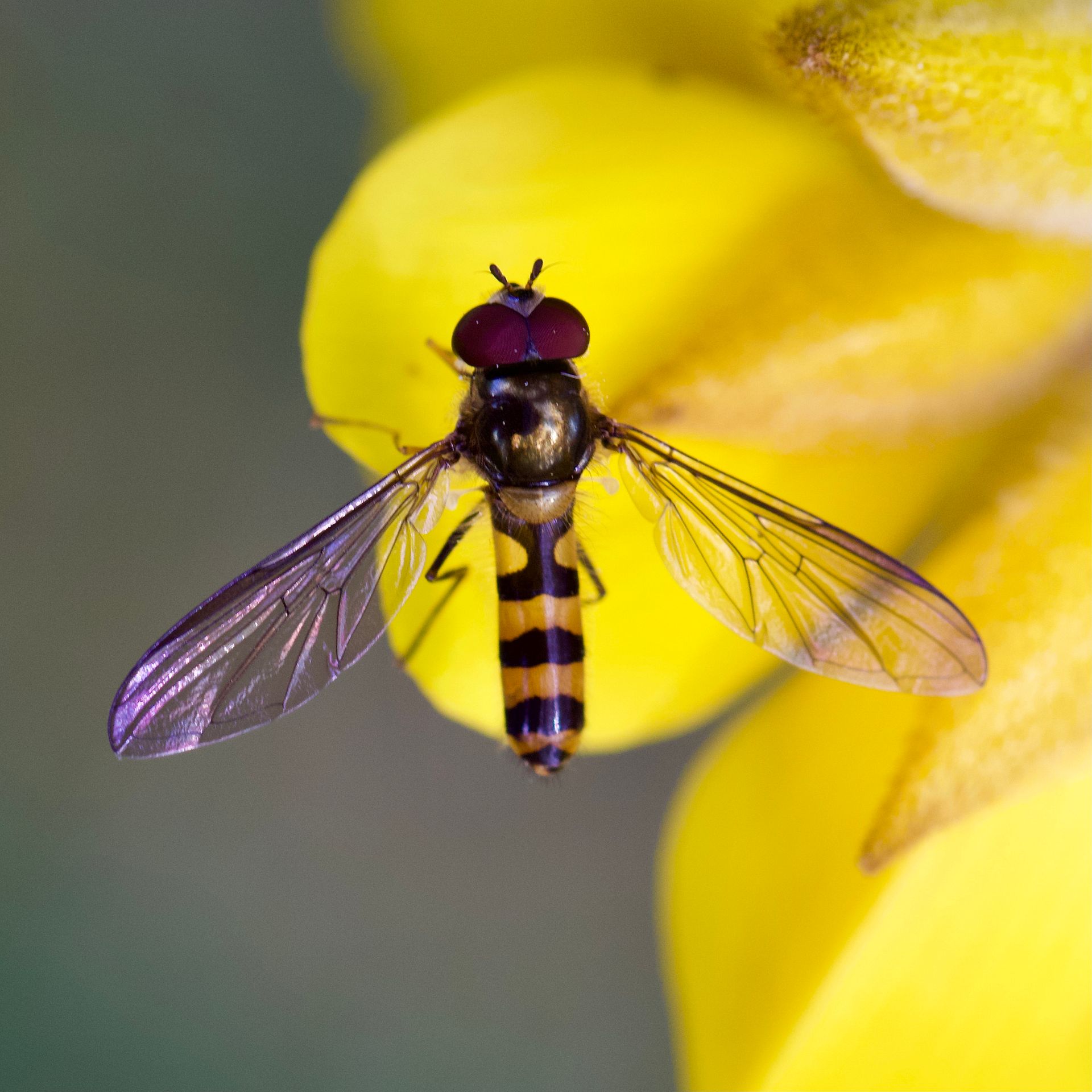
Meliscaeva is a of hoverflies ( Syrphidae) established by Frey in 1946. The genus is predominantly Oriental in distribution, though one , Meliscaeva cinctella, has a wide distribution across North America and Europe. Members are characterized by several bare structural features (, metasternum, metapisternum) and distinctive wing markings. The genus contains approximately 27 described species, with Meliscaeva auricollis being notable as the subject of sequencing research.
Pronunciation
How to pronounce Meliscaeva: //ˌmɛlɪˈskɪːvə//
These audio files are automatically generated. While they are not always 100% accurate, they are a good starting point.
Identification
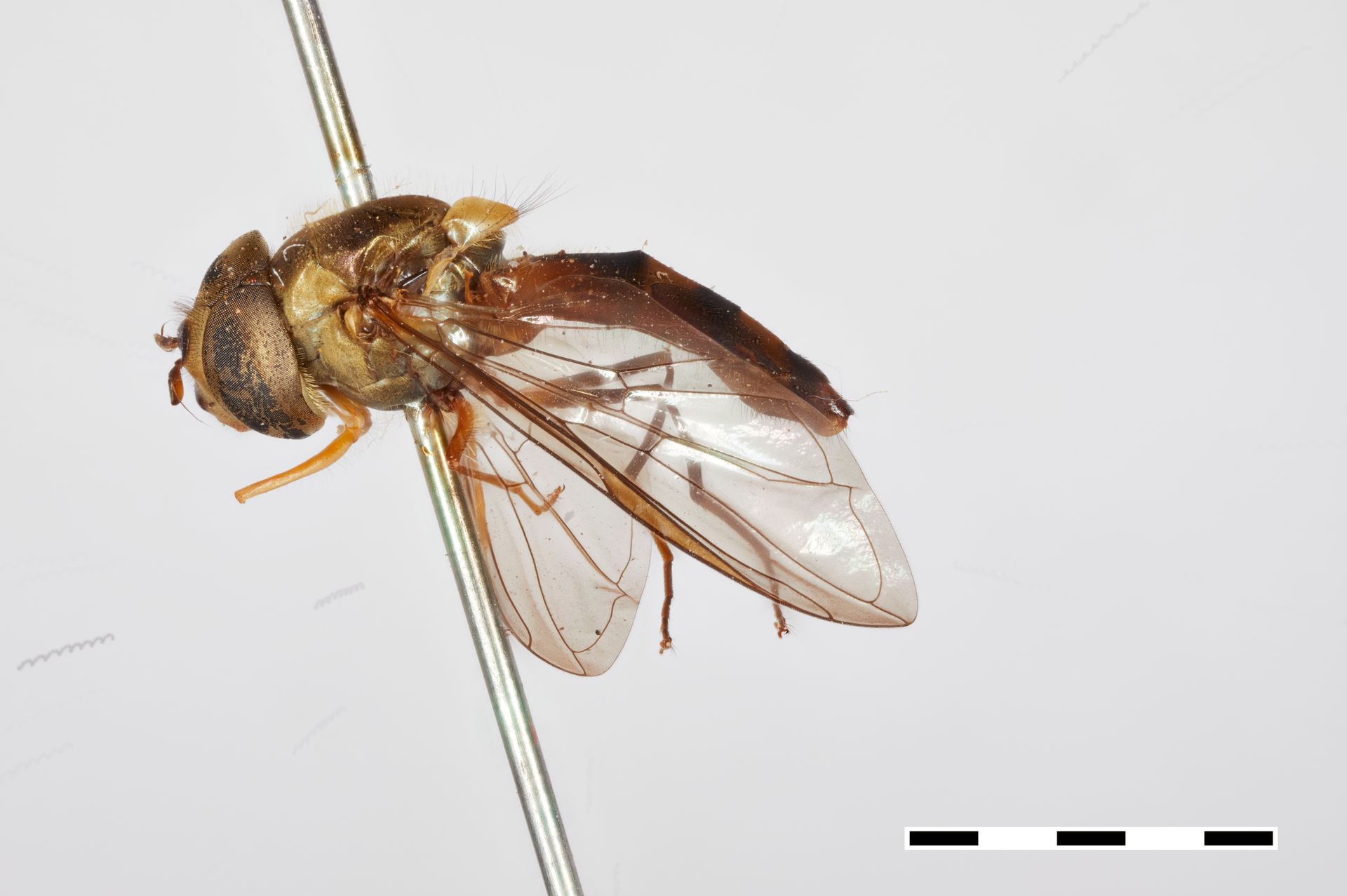
Distinguished from similar hoverfly by the combination of bare , bare metasternum, bare metapisternum, and the distinctive series of minute black maculae along the wing margin. The usually pilose anepisternum provides an additional diagnostic character. Specific identification to level requires examination of additional morphological characters not detailed in available sources.
Images
Appearance
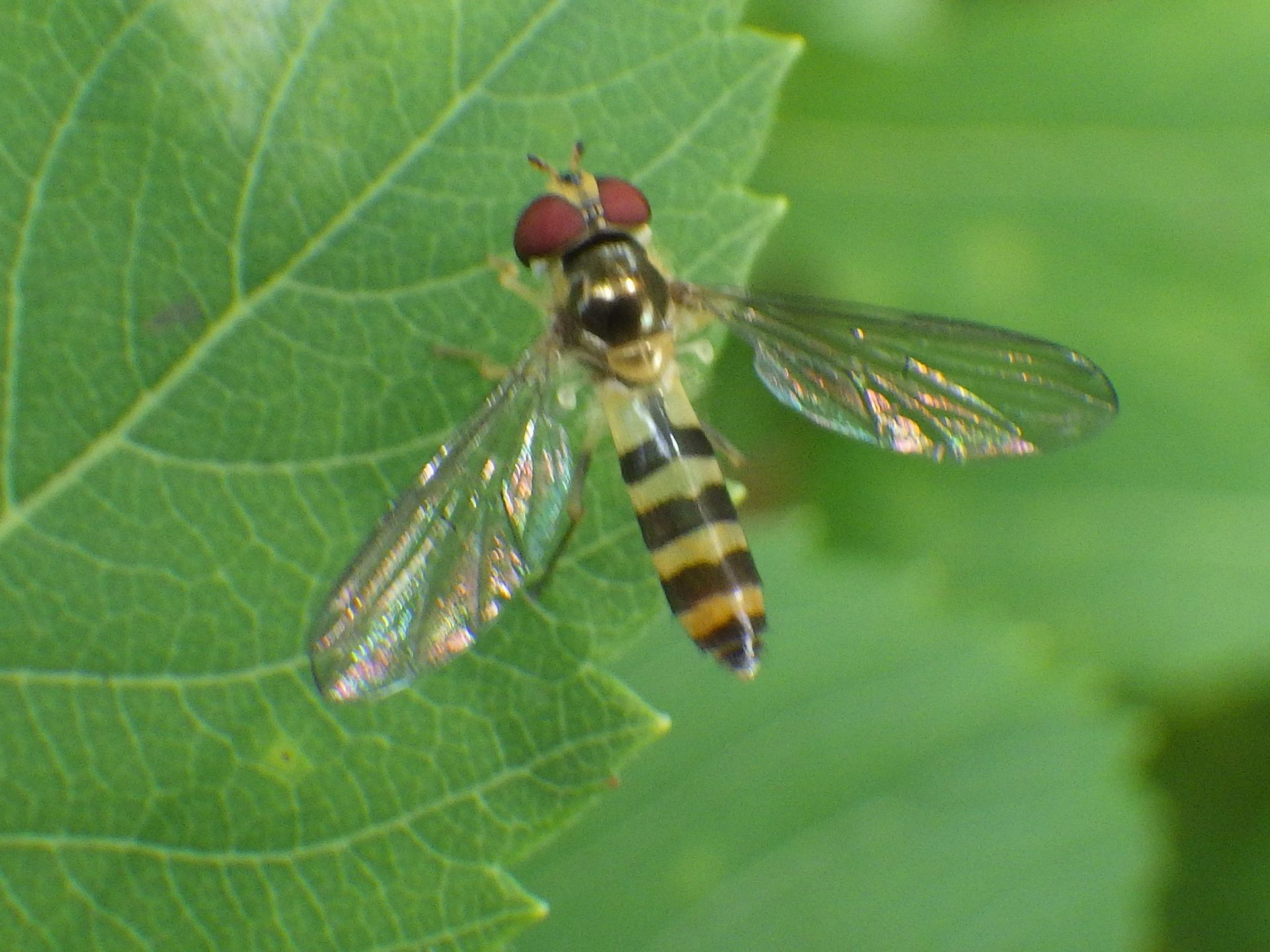
have bare , bare metasternum, and bare metapisternum. The anepisternum is usually pilose. The wing margin bears a series of minute, closely spaced black maculae on the margin. Meliscaeva auricollis specifically is a small black and yellow hoverfly with highly variable abdominal markings ranging from dark individuals with triangular yellow spots to lighter individuals with larger yellow bands.
Habitat
Woodland edges, hedgerows, and mature gardens; associated with trees. Larval includes -infested shrubs such as barberries and broom, as well as flowers and stems of white umbellifers.
Distribution
Predominantly Oriental in distribution. Meliscaeva cinctella is widely distributed in North America and Europe. Meliscaeva auricollis is most frequent in southern and middle England, with records increasingly sparse northwards into Scotland and Ireland.
Seasonality
Meliscaeva auricollis has a wide window from February to December, peaking July-August. Annual abundance is highly variable, with some years showing minimal documented individuals.
Diet
Larvae are . interact with a large variety of flowers.
Life Cycle
Oval-shaped, translucent larvae develop among colonies on shrubs and plants. Larval developmental temperature affects coloration: colder winter development produces darker adults with triangular yellow spots; warmer summer development produces lighter adults with larger yellow abdominal bands.
Behavior
Males hover above forest and sunny tree branches. bask upon sunlit leaves. Highly variable abundance with some years showing barely any individuals documented.
Ecological Role
(larval stage); ( stage interacting with diverse flowers).
Human Relevance
of Meliscaeva auricollis sequenced (385.1 megabases, scaffolded into 5 chromosomal pseudomolecules), contributing to dipteran genomic resources. potential through .
More Details
Genome Sequencing
Meliscaeva auricollis sequence published: 385.1 Mb span, 5 chromosomal pseudomolecules (4 + X ), mitochondrial genome 17.52 kb. Specimen collected from Wytham Woods, Oxfordshire, UK.
Species Diversity
contains 27 described , with majority distributed in Oriental region. Several species described by Ghorpade in 1994 from Indian subcontinent.