
Didea fuscipes
Loew, 1863
Undivided Lucent
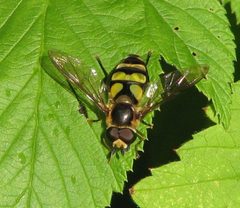
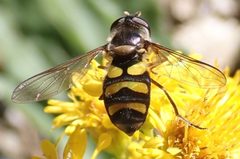
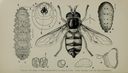
Didea fuscipes is a of hoverfly (Syrphidae) in the tribe Syrphini. It is commonly known as the Undivided Lucent. As a member of the Didea, it shares the characteristic broad, somewhat flattened typical of this group. The species was described by Loew in 1863. Observations of this species are documented in North America, including Vermont in the United States.
Pronunciation
How to pronounce Didea fuscipes: //ˈdɪdiə ˈfjuːsɪˌpiːz//
These audio files are automatically generated. While they are not always 100% accurate, they are a good starting point.
Identification
Members of the Didea can be distinguished from other syrphine hoverflies by their broad, somewhat flattened and characteristic wing venation. Specific identification of D. fuscipes requires examination of morphological details; the specific epithet "fuscipes" refers to dark or dusky legs. Accurate determination typically requires reference to specialized keys for North American Syrphidae.
Images
Distribution
Documented from North America, with specific records from Vermont, United States. Distribution records are sparse, suggesting the may be uncommon or underrecorded across its range.
Similar Taxa
- Didea alnetiAnother in the same with similar overall ; requires detailed examination to distinguish
- Other Didea speciesShare the broad, flattened abdominal shape characteristic of the ; -level identification depends on subtle morphological differences
- Epistrophe and Epistrophella speciesSimilar abdominal patterning in some ; Didea species generally have broader, more flattened
More Details
Taxonomic placement
Didea fuscipes is classified in the tribe Syrphini, Syrphinae, within the Syrphidae. The Didea is a relatively small genus of hoverflies with distinctive .
Observation frequency
As of available records, there are approximately 420 observations documented on iNaturalist, suggesting it is not a commonly encountered relative to more widespread syrphid flies.