Platycheirus coerulescens
(Williston, 1887)
Hooked Sedgesitter
Platycheirus coerulescens, commonly known as the Hooked Sedgesitter, is an uncommon syrphid fly in the Syrphidae. It belongs to the ambiguus group within the Platycheirus, a group characterized by medium to small size, slender legs, and distinctive male fore setation. The species is distinguished by specific leg setae patterns that are diagnostic for identification.
Pronunciation
How to pronounce Platycheirus coerulescens: /ˌplætɪˈkaɪrəs kɔˌruːləˈsɛnz/
These audio files are automatically generated. While they are not always 100% accurate, they are a good starting point.
Identification
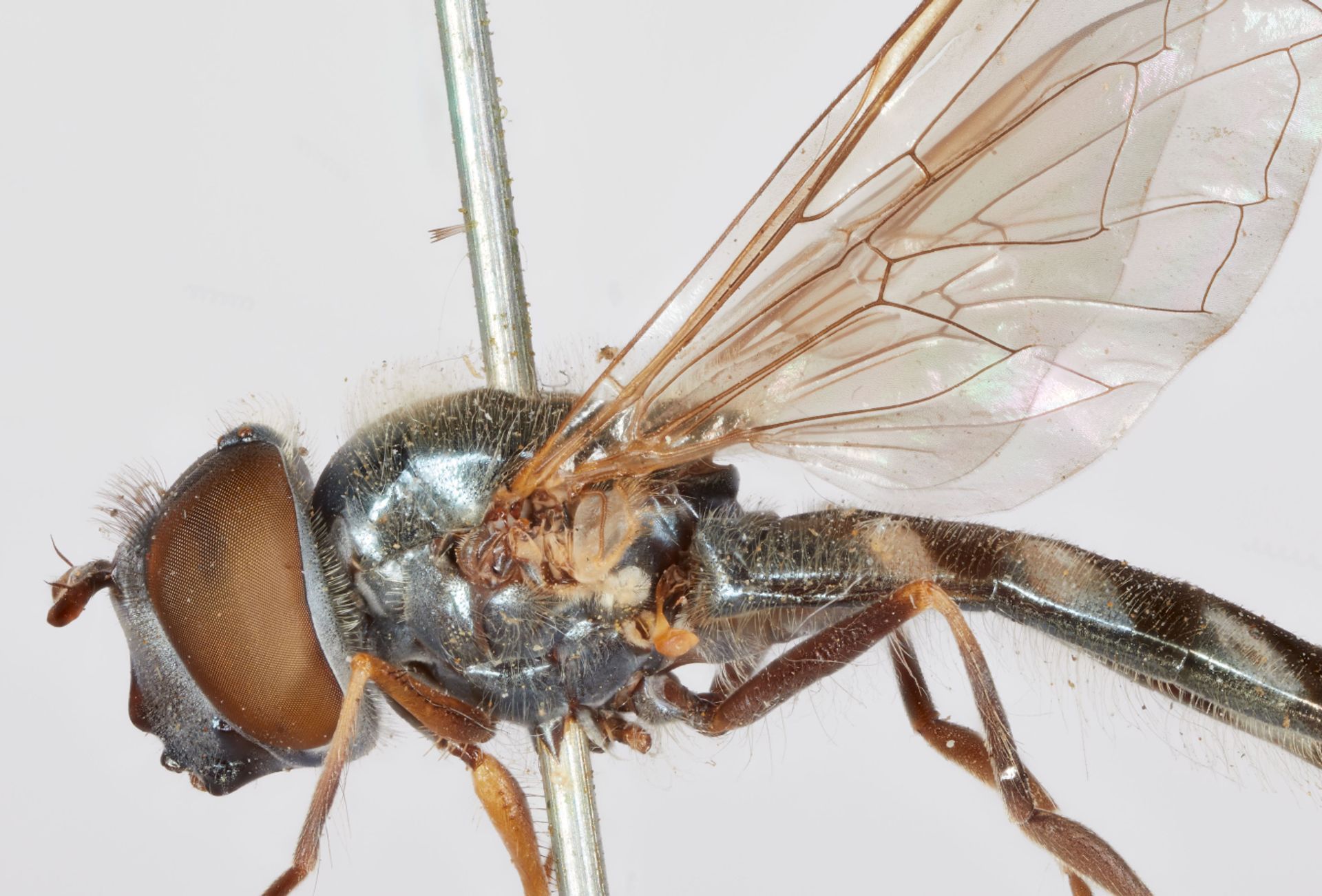
Males are distinguished by a diagnostic row of 9–12 strong, straight, black setae on the part of the fore , approximately twice as long as the femoral diameter, ending in a single longer seta with a strongly curved apex. Additionally, 3–5 strong yellow setae occur on the basal third of the fore femur, slightly shorter than the femoral diameter. The mid femur bears 2–5 long, strong yellow or black anteroventral setae on its basal third, with the longest setae approximately twice the femoral diameter. Body length 6–9 mm. Thoracic pile completely white. Fore and mid femurs orange. Wings mostly bare on basal half. Tergite spots orange, dull yellow, or entirely grey, always overlaid with strong silvery pollinosity.
Images
Habitat
Associated with sedge , as suggested by . High altitude environments in southern parts of range.
Distribution
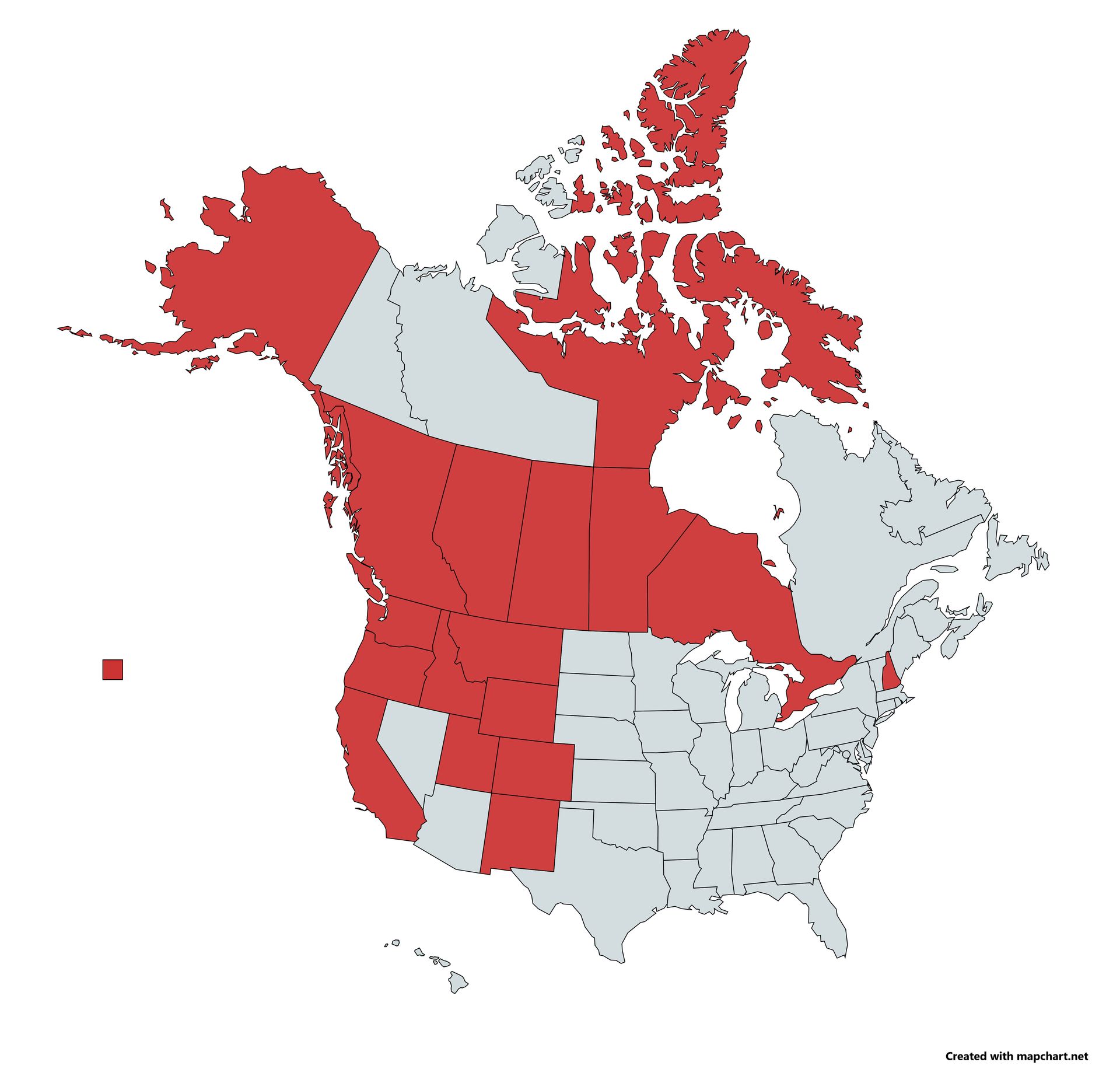
Northern and western Canada, Alaska, south to California and Mexico at high altitudes.
Similar Taxa
- Platycheirus ambiguus group speciesOther ambiguus group (brunnifrons, clausseni, kelloggi, lundbecki, altomontis, caesius, goeldlini, meridimontanus, subambiguus, transfugus) share general body plan and male fore setation pattern, but differ in specific setal counts, colors, and arrangements.