
Pipiza puella
Williston, 1887
Sumac Gall Pithead
Pronunciation
How to pronounce Pipiza puella: //pɪˈpiː.ziː.pjuˈɛl.lə//
These audio files are automatically generated. While they are not always 100% accurate, they are a good starting point.
Identification
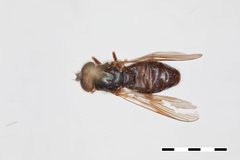
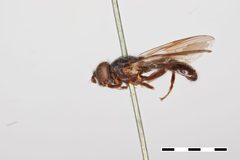
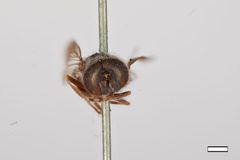
Pipiza are small, dark-colored hoverflies that can be challenging to distinguish from one another without close examination. Members of the typically lack the bold yellow-and-black banding common in many syrphid genera, instead presenting more subdued coloration. Identification to species level in Pipiza generally requires examination of male genitalia and other subtle morphological characters.
Images
Distribution
Eastern and central United States, Canada, and Norway. The disjunct distribution between North America and Europe is notable and may reflect either natural range patterns or potential taxonomic issues requiring further study.
Diet
feed on nectar and protein-rich pollen from flowers. Larvae are .
Host Associations
- Sumac - gall formationThe 'sumac gall pithead' suggests an association with sumac (Rhus spp.), though the specific nature of this relationship requires clarification
Behavior
exhibit typical hoverfly , including the ability to remain nearly motionless in flight. Adults are commonly found on flowers.
Ecological Role
serve as through their flower-visiting . Larvae function as agents by preying on aphids.
Similar Taxa
- Other Pipiza speciesMembers of Pipiza are morphologically similar and require careful examination for accurate identification; the is considered taxonomically difficult
- Other small dark syrphid generaLack of bold color patterns distinguishes Pipiza from more conspicuous hoverfly like Syrphus or Eupeodes, but convergence in body form occurs with other small, dark-colored syrphids
More Details
Taxonomic notes
The disjunct distribution (North America and Norway) and limited observational records (9 observations in iNaturalist) suggest this may be undercollected, understudied, or potentially misidentified in some records. The specific epithet 'puella' (Latin for 'girl' or 'maiden') was established by Williston in 1887.
Data gaps
Critical details including specific larval , complete geographic range, , and morphological diagnostic characters remain poorly documented in accessible literature.