
Mixogaster
Macquart, 1842
Species Guides
2- Mixogaster breviventris(Slender Ant Fly)
- Mixogaster fattigi(Fattig's Ant Fly)
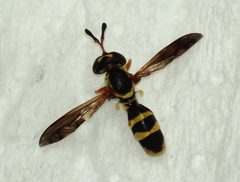
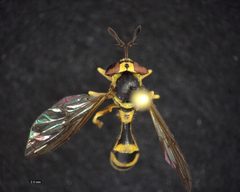
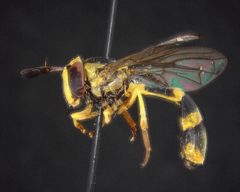
Mixogaster is a of hoverflies in the Microdontinae, native to the Americas. The genus comprises approximately 19-21 and is distinguished by specific wing venation characters and reduced metasternal structures. are myrmecophilous mimics with constricted . Larvae develop as scavengers inside nests.
Pronunciation
How to pronounce Mixogaster: //mɪkˈsɔɡæstər//
These audio files are automatically generated. While they are not always 100% accurate, they are a good starting point.
Identification
Distinguished from related by: lacking an appendix on R4+5; reduced and bare metasternum; unarmed scutellum; and usually possessing an appendix on vein M extending into R4+5. Distinguished from the Oriental genus Paramixogaster (formerly considered congeneric) by geographic distribution and subtle structural differences.
Images
Habitat
occur in environments where ants are present. Larvae inhabit nests, where they function as scavengers.
Distribution
North America and South America.
Diet
Larvae feed as scavengers in nests. feeding habits are not documented.
Host Associations
- Formicinae - larval
- Myrmicinae - larval
- Dolichoderinae - larval ; specifically documented for some
Life Cycle
Larval development occurs within nests. One documented case of a related (Paramixogaster vespiformis) involved a larva being reared to stage from an ant nest, suggesting complete larval development occurs in this microhabitat.
Behavior
are mimics with slender bodies, constricted , and long . Unlike most syrphid flies, adults are not known to visit flowers.
Ecological Role
Myrmecophilous ; larvae function as scavengers within nest , potentially contributing to nutrient cycling in these microhabitats.
Similar Taxa
- ParamixogasterFormerly considered congeneric with Mixogaster; separated based on geographic distribution (Oriental, Afrotropical, and Australasian Regions vs. Americas) and structural differences. Paramixogaster was erected when Mixogaster vespiformis was recognized as not fitting within the New World .
More Details
Taxonomic history
The Paramixogaster was erected by Brunetti (1923) after recognizing that Mixogaster vespiformis did not fit well into the New World genus Mixogaster, leading to the separation of these geographically distinct lineages.