
Microdon megalogaster
Snow, 1892
Black-bodied Ant Fly
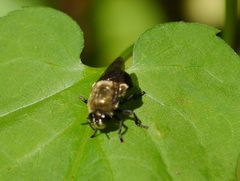
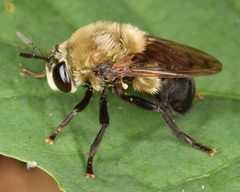
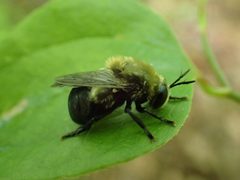
Microdon megalogaster, commonly known as the black-bodied fly, is a syrphid fly found in north-eastern North America. measure 12–14 mm and display metallic greenish coloration with distinctive morphological features. The larvae develop as in ant nests, specifically those of Formica subsericea and Formica fusca. The species was described by Snow in 1892 and is one of approximately 6,200 described syrphid species worldwide.
Pronunciation
How to pronounce Microdon megalogaster: /ˈmaɪ.kroʊˌdɒn ˌmɛɡəloʊˈɡæstər/
These audio files are automatically generated. While they are not always 100% accurate, they are a good starting point.
Identification
Distinguished from other Microdon by the combination of: black body with metallic greenish and bluish scutellum; bare ; specific antennal proportions with first segment nearly as long as remaining two combined; wing venation with strongly recurrent last section of fourth and bulbous last section of fifth vein; and entirely blackish legs with distinctive tarsal patterns. The specific association with Formica may aid identification where larval collections are possible.
Images
Distribution
North-eastern North America.
Host Associations
- Formica subsericea - larval black field ant; larvae found in nests
- Formica fusca - larval silky ; larvae found in nests
Similar Taxa
- Microdon aurulentusCongeneric with similar -associated larval ; differ in coloration and specific morphological details
- Other Microdon speciesShare lifestyle in nests; distinguished by specific combinations of coloration, antennal proportions, and wing venation
More Details
Taxonomic Note
Catalogue of Life lists this as a synonym, though GBIF and other sources treat it as accepted. Taxonomic status may require verification.