
Microdon manitobensis
Curran, 1924
Greater Ant Fly
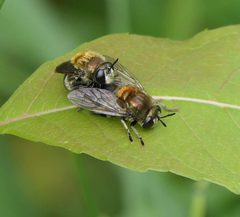
Microdon manitobensis, commonly known as the Greater Fly, is a of syrphid fly first described by Curran in 1924. It belongs to the Microdontinae, a group of hover flies with unusual involving ant associations. The species is part of a whose larvae are known to inhabit ant nests, though specific details for this species remain limited. It has been documented in museum collections and citizen science observations, with 59 records on iNaturalist as of the available data.
Pronunciation
How to pronounce Microdon manitobensis: /ˈmaɪ.kroʊˌdɒn ˌmænɪtoʊˈbɛnsɪs/
These audio files are automatically generated. While they are not always 100% accurate, they are a good starting point.
Identification
Identification to level requires examination of morphological characters not detailed in general sources. The Microdon is distinguished from other syrphids by its association with nests and corresponding larval adaptations. lack the yellow-and-black banding common in many flower-mimicking syrphids. Specimen identification has been verified in museum collections such as the Illinois Natural History Survey. Separation from congeneric species requires taxonomic knowledge.
Images
Habitat
Specific requirements for M. manitobensis are not documented. Members of the Microdon are associated with nests, with larvae developing within ant colonies. are presumably found in environments where ant occur.
Distribution
Documented from Manitoba (type locality implied by specific epithet) and surrounding regions of central North America. Records exist in the Illinois Natural History Survey collection and iNaturalist observations. The was among those contributing to new species records and range data in a 2023 study of Illinois hover flies combining museum and citizen science data.
Seasonality
activity period not specifically documented. Syrphid flies in temperate regions are generally active during warmer months.
Host Associations
Life Cycle
Complete with , larval, pupal, and stages. Larval development occurs within nests, a characteristic of the Microdontinae. Specific details of the for this are not available.
Behavior
not specifically documented. Larvae are presumed to be adapted to life within colonies, with associated behavioral modifications.
Ecological Role
Larvae likely function as or within nests, though the specific ecological role of M. manitobensis is not documented. may contribute to pollination as with other syrphid flies.
Human Relevance
No specific documented interactions. General relevance as part of hover fly biodiversity and potential for health. Museum specimens of this contributed to research on range changes and conservation status of Illinois hover flies.
Similar Taxa
- Microdon aurulentusCongeneric with similar -associated ; distinguished by coloration and morphological details
- Other Microdon speciesShare the robust body form and -nest association; require examination for separation
- Honey bees (Apis mellifera) may be mistaken for bees by casual observers; distinguished by single pair of wings, short , and hovering
More Details
Taxonomic status
Listed as accepted in GBIF and NCBI; Catalogue of Life lists as synonym, though this may reflect outdated . Authority: Curran, 1924.
Research significance
Specimens of this contributed to a 2023 study demonstrating the value of museum collections and citizen science data for documenting range changes and conservation needs in hover flies.