
Copestylum tamaulipanum
Townsend, 1898
Woolly Bromeliad Fly
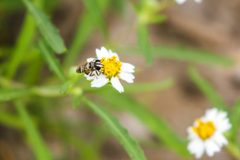
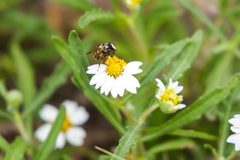
Copestylum tamaulipanum is a of syrphid hoverfly known from Mexico and the Mexico–United States border region. Larvae develop in decaying platyclades of Opuntia cacti, exhibiting saprophytic feeding . are flower visitors. The species has been introduced to Hawaii.
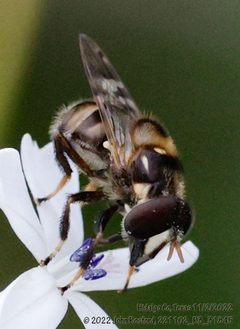
Pronunciation
How to pronounce Copestylum tamaulipanum: /koʊˈpɛstɪləm ˌtæmaʊˈliːpənəm/
These audio files are automatically generated. While they are not always 100% accurate, they are a good starting point.
Identification
Distinguished from similar Copestylum by morphological features of the cephalopharyngeal skeleton in larvae; require expert identification. The species name references Tamaulipas, Mexico.
Images
Habitat
Decaying platyclades of Opuntia cacti; associated with cactus rot and decomposition in arid and semi-arid environments.
Distribution
Native to Mexico (Veracruz, Tamaulipas region) and the Mexico–United States border area. Introduced and established in Hawaii, United States.
Diet
Saprophytic; larvae feed on decaying cactus tissue of Opuntia. visit flowers.
Host Associations
- Opuntia - larval development in decaying platycladesprimary ; larvae collected from and reared in decaying cactus tissue
Life Cycle
Larvae collected from decaying cactus platyclades and reared to in laboratory conditions. Complete duration not documented.
Behavior
Larval feeding has been analyzed in relation to cephalopharyngeal skeleton , reflecting adaptations for saprophytic feeding in decaying plant tissue.
Ecological Role
Saprophyte contributing to decomposition of cactus material in desert and semi-desert .
Similar Taxa
- Copestylum lentumcongeneric syrphid with similar saprophytic larval and ; both studied together in larval development research
- Other Copestylum species contains multiple saprophytic and bromeliad-associated requiring careful morphological distinction