Milesia bella
Townsend, 1897
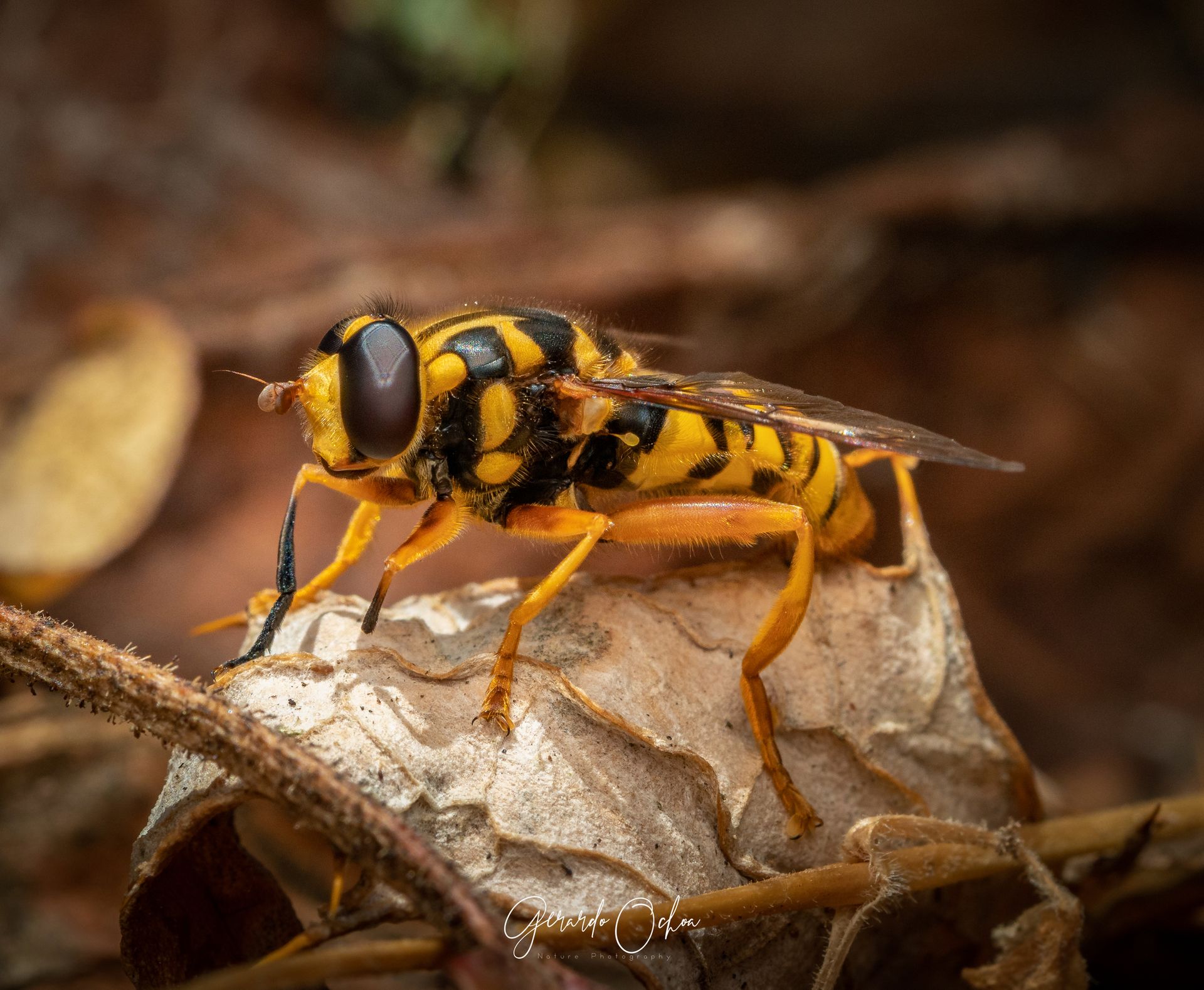
Milesia bella is a of in the , first described by Townsend in 1897. It is one of three species in the Milesia found in North America, with a distribution restricted to the southwestern United States. Like other members of its genus, it is a large, strikingly colored that exhibits . The species is considerably less documented than its eastern relative M. virginiensis, with limited published information on its biology and .
Pronunciation
How to pronounce Milesia bella: /maɪˈliːziə ˈbɛlə/
These audio files are automatically generated. While they are not always 100% accurate, they are a good starting point.
Identification
Milesia bella can be distinguished from the eastern M. virginiensis by its southwestern U.S. distribution. It is distinguished from M. scutellata, which occurs in the southeastern U.S. from southeast Oklahoma to North Carolina. All three Milesia are large (18-28.5 mm body length), with , , and black coloration resembling . Specific diagnostic features for M. bella are not documented in available sources.
Images
Distribution
Southwestern United States; Mexico. The ' range is more restricted and westerly than M. virginiensis (eastern North America) and M. scutellata (southeastern U.S.).
Similar Taxa
- Milesia virginiensisOverlaps in large size and -mimicking coloration; distinguished by eastern North distribution versus southwestern range of M. bella
- Milesia scutellataSimilar large size and coloration; distinguished by southeastern U.S. distribution (southeast Oklahoma to North Carolina) versus southwestern range of M. bella
More Details
Taxonomic note
Milesia bella is one of three North in the Milesia, a group of large, conspicuous . The genus is notable for its members' striking resemblance to , including size, coloration, and . The specific epithet 'bella' (Latin for 'beautiful') likely refers to the species' attractive appearance.
Data limitations
Available sources contain minimal specific information on M. bella compared to M. virginiensis. Most biological details documented for the (larval development in rotting wood, hovering , ) are derived from studies of M. virginiensis and should not be assumed for M. bella without direct observation.
Sources and further reading
- BugGuide
- Wikipedia
- GBIF taxonomy match
- iNaturalist taxon
- Catalogue of Life
- Bug Eric: The "News Bee"
- Dr. Charles L. “Chuck” Bellamy—Tribute to a friend | Beetles In The Bush
- Dr. Charles L. “Chuck” Bellamy – 12th Honorary Member of The Coleopterists Society | Beetles In The Bush
- North America’s most “extreme” jewel beetle | Beetles In The Bush
- Two new species of Agrilus from Mexico | Beetles In The Bush
- Mexico 1992—Gang of Ten | Beetles In The Bush