
Blera scitula
(Williston, 1882)
Western Wood Fly
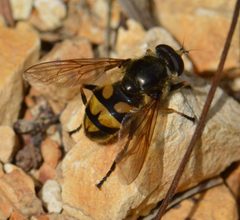
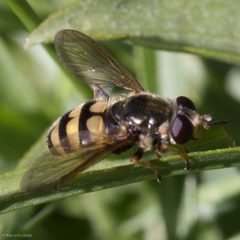
Blera scitula, commonly known as the western wood fly, is a syrphid hoverfly first described by Williston in 1882. It is an uncommon Nearctic species found along the western coastal area of North America. are flower visitors that obtain nectar and pollen, while larvae are of the rat-tailed type, developing in tree rot holes or feeding on exuding sap.
Pronunciation
How to pronounce Blera scitula: /ˈblɛ.ra ˈskɪ.tu.la/
These audio files are automatically generated. While they are not always 100% accurate, they are a good starting point.
Identification
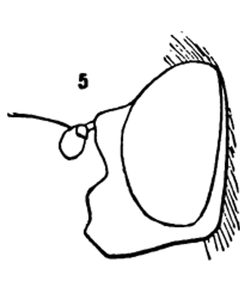
Distinguished from similar syrphid flies by the combination of: bold yellow abdominal spotting pattern with large forward-directed spots on segment 2 and broad basal band on segment 3; aeneous with specific yellow pile pattern (bright yellow before transverse , on lateral margins, and in front of scutellum); yellow with prominent rounded ; and red . Male separate it from females and some related . The specific wing venation with R4+5 almost straight and acute first provides additional diagnostic characters. Genitalia were described by Metcalf (1921) for definitive identification.
Images
Habitat
Associated with woodland environments where larval development occurs in tree rot holes or on exuding sap. activity centered around flowers in these wooded .
Distribution
Nearctic region, restricted to the western coastal area of North America.
Diet
feed on nectar and pollen from flowers. Larvae feed on exuding sap or in rot holes of trees.
Life Cycle
Larvae are of the rat-tailed type, a morphological for respiration in liquid or semi-liquid substrates. Development occurs in tree rot holes or on exuding sap.
Behavior
exhibit hovering typical of syrphid flies. Commonly found around and on flowers.
Ecological Role
function as through flower visitation. Larvae contribute to nutrient cycling in decaying wood environments.
Similar Taxa
- Other Blera speciesShare -level traits including rat-tailed larvae and similar overall ; require examination of abdominal spot patterns, thoracic pile coloration, and male genitalia for separation.
- Other Milesiini with yellow-spotted abdomensSimilar color patterns occur in related syrphine ; B. scitula distinguished by specific combination of thoracic pile pattern, structure, and wing venation.