Arctosyrphus willingii
(Smith, 1912)
northern longbeak
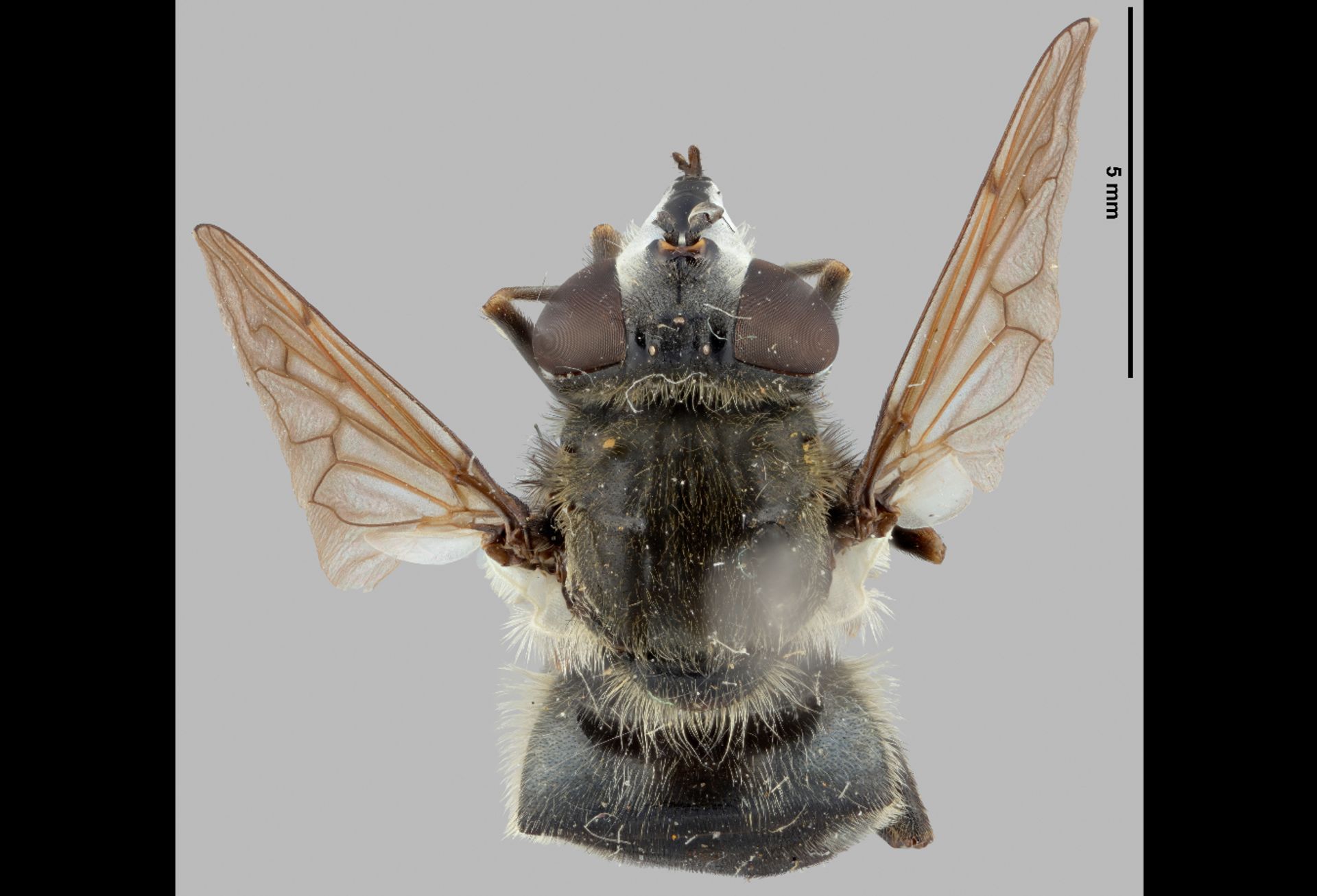
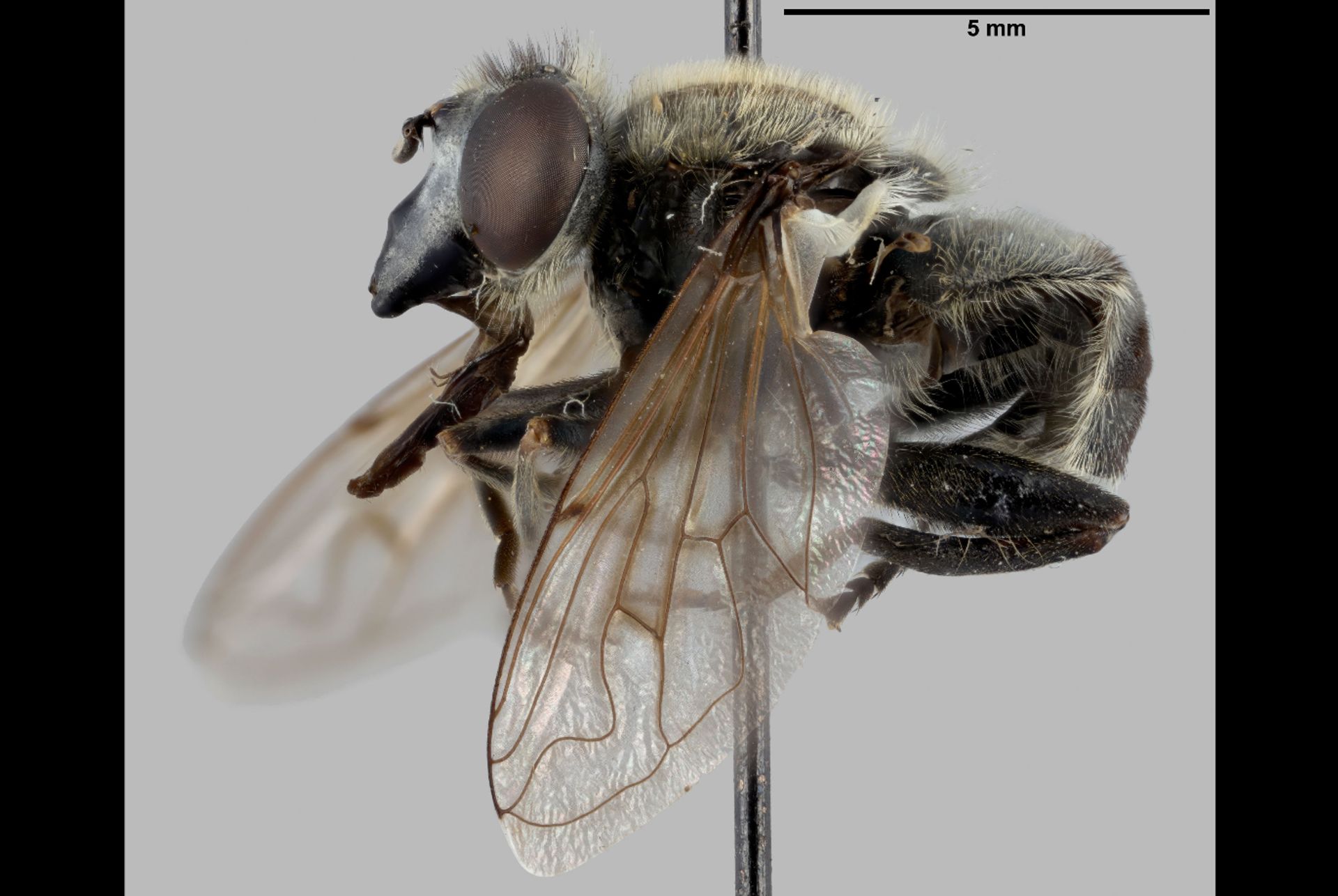
Arctosyrphus willingii, known as the northern longbeak, is a of hoverfly in the Syrphidae. It is a medium-sized fly, 11–12 mm in length, with distinctive in width and wing coloration. The species was formerly classified under the Lejops. It is restricted to and subarctic regions of North America.
Pronunciation
How to pronounce Arctosyrphus willingii: //ˌɑrktoʊˈsɪrfəs ˈwɪlɪŋaɪ//
These audio files are automatically generated. While they are not always 100% accurate, they are a good starting point.
Identification
Distinguished from similar syrphid flies by the conical facial projection (the 'longbeak'), enlarged and swollen hind , and arcuate hind tibiae lacking a spur. The in wing coloration (clear in males, smoky in females) and width (half width in males, nearly equal in females) aids identification. The R4+5 loops into R4+5, a characteristic wing venation feature.
Images
Distribution
and subarctic North America. Canada: Yukon, Alberta, Manitoba, Saskatchewan. United States: Alaska, Minnesota, North Dakota.
Similar Taxa
- Lejops speciesFormerly classified in this ; Arctosyrphus willingii was transferred from Lejops based on morphological revisions
- Other Arctosyrphus speciesShare conical facial projection and enlarged hind , but A. willingii distinguished by specific pattern of pile coloration and distribution
More Details
Taxonomic history
Transferred from Lejops to Arctosyrphus based on morphological studies. The genus Arctosyrphus is characterized by the distinctive facial cone and modified hind legs.
Morphological terminology
Descriptions use standard syrphid morphological terms: (upper between ), vertex (top of ), ocelli (simple eyes), epistoma (lower facial margin), pollinose (dusty or powdery appearance), (antennal bristle), and scutellum (thoracic plates), pleurae (thoracic sides), calypteres (small wing flaps at wing base), (balancing organs).