
Eristalis rupium
Fabricius, 1805
Spot-winged Drone Fly
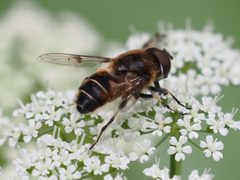
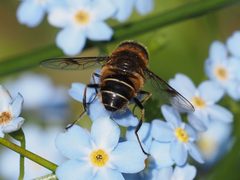
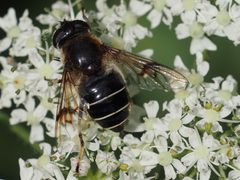
Eristalis rupium, the spot-winged drone fly, is a European hoverfly first described by Fabricius in 1805. It is a common species across Europe and uncommon in North America. Like other Eristalis species, it exhibits of honey bees and serves as an important . The larvae are aquatic filter-feeders of the rat-tailed type, inhabiting clear-water streams.
Pronunciation
How to pronounce Eristalis rupium: //ˌɛrɪˈsteɪlɪs ˈruːpiəm//
These audio files are automatically generated. While they are not always 100% accurate, they are a good starting point.
Images
Habitat
Larvae inhabit streams with clear water. are commonly found around and on flowers.
Distribution
Europe (common); North America (uncommon). Distribution records from Flanders, Belgium, Walloon Region, Denmark, and Norway.
Diet
feed on nectar for energy and pollen as a protein source for development. Larvae are filter-feeders consuming bacteria and other microbes from organic matter in water.
Life Cycle
Larvae are aquatic filter-feeders of the rat-tailed type, possessing an elongated siphon for breathing. Larvae develop in clear-water streams, then seek dry land to pupate. occurs in a hard capsule.
Behavior
are capable of hovering nearly motionless in . Exhibits migratory alongside staying-put strategies to survive variable winter conditions.
Ecological Role
serve as , visiting flowers to obtain nectar and pollen. Larvae contribute to nutrient cycling as filter-feeders in aquatic systems.
Human Relevance
provide pollination services in gardens and natural landscapes. The is sometimes mistaken for bees due to its mimicry.
Similar Taxa
- Eristalis tenaxBoth are drone flies with similar -mimic appearance; E. tenax is more and has larvae in organic-rich standing water rather than clear streams.
Sources and further reading
- BugGuide
- Wikipedia
- GBIF taxonomy match
- iNaturalist taxon
- NCBI Taxonomy
- Catalogue of Life
- To Bee or Not to Bee | Bug Squad
- A friendlier type of drone: Common Drone Fly, Eristalis tenax — Bug of the Week
- Bug Eric: Fly Day Friday: Rat-tailed Maggots
- Insect Migration (Part 1) - Buglife Blog - Buglife
- Mudo Pryfed (Rhan 1) - Buglife Blog - Buglife
- Strathmore B-Lines: Surveying Grasslands and Pollinating Insects in the Strathmore Valley - Buglife Blog - Buglife