
Eristalis interrupta
(Poda, 1761)
Eristalis interrupta is a of hoverfly ( Syrphidae) in the Eristalis. Like other members of this genus, it belongs to a group commonly known as drone flies due to their resemblance to honey bees. The genus Eristalis contains species that are important and whose larvae are aquatic decomposers found in organic-rich water. Specific details about E. interrupta are limited in the provided sources, though it shares the general characteristics of Eristalis species including of bees and .
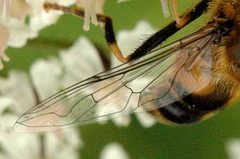
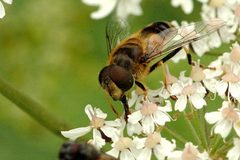
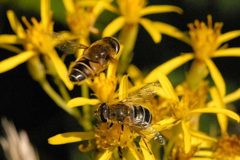
Pronunciation
How to pronounce Eristalis interrupta: //ɛˈrɪstəlɪs ɪntəˈrʌptə//
These audio files are automatically generated. While they are not always 100% accurate, they are a good starting point.
Images
Similar Taxa
- Eristalis tenaxBoth are Eristalis with similar -mimic appearance; E. tenax is the most common and widespread species in the , often used as a reference for comparing other Eristalis species
- Apis melliferaEristalis including E. interrupta are Batesian mimics of honey bees, sharing similar coloration and body form but distinguished by having only one pair of wings (Diptera) versus two pairs in bees (Hymenoptera), and lacking a narrow waist
More Details
Taxonomic Note
Eristalis interrupta was described by Poda in 1761. The Eristalis is well-known for containing drone flies, named for their resemblance to male honey bees (drones). -level identification within Eristalis often requires examination of subtle morphological characters not detailed in the provided sources.
Data Limitations
The provided source material focuses heavily on Eristalis tenax as the representative for the , with only passing mention of Eristalis interrupta in taxonomic databases. Species-specific biological information for E. interrupta is not available in the sources provided.
Sources and further reading
- BugGuide
- GBIF taxonomy match
- NCBI Taxonomy
- To Bee or Not to Bee | Bug Squad
- A friendlier type of drone: Common Drone Fly, Eristalis tenax — Bug of the Week
- Bug Eric: Fly Day Friday: Rat-tailed Maggots
- Insect Migration (Part 1) - Buglife Blog - Buglife
- Bug Eric: Last Night to Blacklight?
- Mudo Pryfed (Rhan 1) - Buglife Blog - Buglife