
Merosargus
Loew, 1855
soldier flies
Species Guides
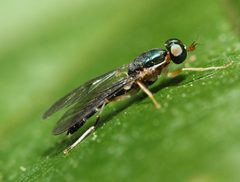
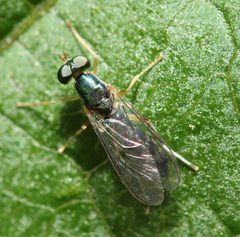
2Merosargus is a large of soldier flies (Stratiomyidae: Sarginae) comprising at least 140 described , primarily distributed in the Neotropical region. The genus exhibits remarkable , which appears to be maintained through larval resource-use specialization. males defend oviposition sites, and larvae develop in association with decomposing plant materials.

Pronunciation
How to pronounce Merosargus: //ˌmɛrəˈsɑːrɡəs//
These audio files are automatically generated. While they are not always 100% accurate, they are a good starting point.
Images
Habitat
Larvae develop in rotting vegetal material, including decomposing plant matter associated with herbs, vines, palms, and trees. Specific microhabitats include rotting stems, leaf axils, and other decomposing plant substrates.
Distribution
Neotropical region, with documented occurrences in Brazil (states of Paraná, Ceará, Maranhão, Mato Grosso do Sul, Rio de Janeiro, and Minas Gerais).
Life Cycle
Larvae pass through multiple instars (6th instar documented for some ) before pupating; puparial stage has been described for at least one species (M. cingulatus).
Behavior
males exhibit territorial , defending oviposition sites. This territoriality may lead to and has been hypothesized to drive resource specialization.
Ecological Role
Larvae contribute to decomposition of plant material. High degree of larval resource specialization and minimal overlap in resource use among sympatric suggests partitioning maintains local diversity.
Similar Taxa
More Details
Species diversity and specialization
The contains at least 140 described . A study of 12 sympatric species in Brazil found that six species used only a single resource type, with each resource type used on average by less than two species, indicating strong larval resource specialization.
Sources and further reading
- BugGuide
- Wikipedia
- GBIF taxonomy match
- iNaturalist taxon
- NCBI Taxonomy
- Catalogue of Life
- Use of Plant Resources byMerosargus(Diptera, Stratiomyidae, Sarginae) Larvae
- Puparium of Merosargus cingulatus Schiner, 1868 and Ptecticus lanei James, 1941 (Diptera: Stratiomyidae: Sarginae), with new geographical records for the species and a list of all known immatures of the subfamily