
Hermetiinae
Genus Guides
1- Hermetia(soldier flies)
Hermetiinae is a of soldier flies ( Stratiomyidae) comprising six recognized : Apisomyla, Chaetohermetia, Chaetosargus, Hermetia, Notohermetia, and Patagiomyia. The group includes the well-known genus Hermetia, whose larvae are used in waste management and animal feed production. are generally robust flies with reduced mouthparts.
Pronunciation
How to pronounce Hermetiinae: //ˌhɛrməˈtaɪəˌniː//
These audio files are automatically generated. While they are not always 100% accurate, they are a good starting point.
Identification
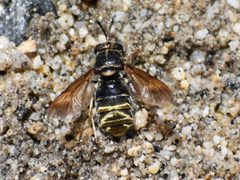
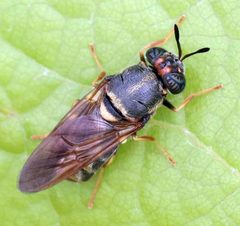
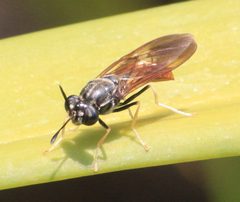
Hermetiinae can be distinguished from other Stratiomyidae by the combination of a bare , reduced or absent mouthparts, and specific wing venation patterns. The scutellum typically bears two to four strong marginal spines. Members of the Hermetia are recognized by their -like black and blue metallic coloration with transparent wings.
Images
Habitat
Larvae develop in diverse organic substrates including decaying plant matter, manure, compost, and decomposing animal material. flies are often found in wooded areas, near larval development sites, or visiting flowers for nectar.
Distribution
Widely distributed across tropical and temperate regions globally. Individual show varying distributions: Hermetia is pantropical with some temperate extensions, while Notohermetia and Patagiomyia have more restricted ranges in specific biogeographic regions.
Seasonality
activity patterns vary by and geographic location. In temperate regions, peak occurs during warm months; tropical may be active year-round.
Diet
have reduced, non-functional mouthparts and do not feed. Larvae are saprophagous, consuming decaying organic matter.
Life Cycle
Complete with , larva, pupa, and stages. Larvae pass through multiple instars before pupating within the substrate. Development time varies with temperature and food quality.
Behavior
are and often observed resting on vegetation or flying in shaded areas. Larvae of Hermetia illucens (black soldier fly) exhibit gregarious feeding and are known to deter other Diptera from oviposition sites through chemical cues.
Ecological Role
Larvae function as decomposers in nutrient cycling, breaking down organic waste. They serve as a food source for various including birds, reptiles, and predatory insects. In agroecosystems, they help reduce manure volumes and loads.
Human Relevance
Hermetia illucens larvae are commercially cultivated for animal feed (poultry, fish, and livestock), organic waste treatment, and production of and protein meal. The has been introduced to several countries for bioconversion applications. No medical or veterinary importance as .
Similar Taxa
- SarginaeAnother of Stratiomyidae with similar general body plan; distinguished by presence of setae on the and different antennal structure.
- StratiomyinaeShares -level characteristics but typically has more elaborate color patterns and different wing venation with distinct shape.
- ClitellariinaeSimilar robust build but distinguished by elongated body form, different antennal , and larval preferences.
More Details
Taxonomic history
The has undergone several revisions. The Apisomyla was described as recently as 2019, indicating ongoing taxonomic work in this group.
Economic importance
The black soldier fly industry has grown substantially since 2010, with Hermetia illucens larvae now produced at industrial in North America, Europe, and Asia for feed and waste management applications.