
Actina
Meigen, 1804
Species Guides
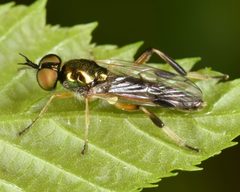
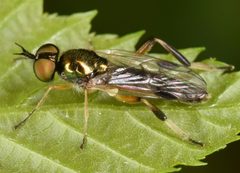
1- Actina viridis(green soldier fly)
Actina is a of soldier flies ( Stratiomyidae) established by Meigen in 1804. The genus comprises approximately 30 described distributed across the Holarctic and Oriental regions, with notable diversity in China. are typically associated with moist, vegetated near water sources. Larval stages are presumed to develop in decaying organic matter or moist soil, consistent with family-level , though specific remains poorly documented for most species.
Pronunciation
How to pronounce Actina: /ækˈtaɪnə/
These audio files are automatically generated. While they are not always 100% accurate, they are a good starting point.
Identification
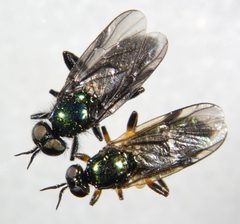
Members of Actina can be distinguished from related beridine by combinations of antennal structure, wing venation patterns, and abdominal coloration. Many exhibit distinctive maculation patterns on the , including spots or bands that serve as diagnostic characters. The genus requires careful examination of male terminalia for definitive species-level identification. Actina species generally lack the pronounced metallic coloration seen in some other stratiomyid genera.
Images
Habitat
have been observed in riparian zones, wetlands, and forest edges with abundant herbaceous vegetation. Larval are inferred to include saturated soils, decaying plant matter, and organic detritus in moist environments based on -level .
Distribution
Widespread across the Palearctic, Nearctic, and Oriental biogeographic regions. Documented from Europe, Russia, Japan, China, and North America. Chinese fauna shows exceptional diversity with numerous described from Yunnan, Guizhou, and Tibet.
Life Cycle
Complete with , larval, pupal, and stages. Larvae are presumably aquatic or semi-aquatic, developing in moist substrates. Specific developmental duration and are undocumented.
Behavior
are and have been observed visiting flowers for nectar. Males may establish mating territories near larval sources. Swarming has not been documented.
Ecological Role
may contribute to pollination through flower visitation. Larvae likely function as decomposers in wetland and riparian , processing organic detritus and contributing to nutrient cycling.
Human Relevance
No direct economic importance. Occasionally encountered by entomologists in biodiversity surveys. Not known to be a pest or beneficial in agricultural or medical contexts.
Similar Taxa
- BerisOverlaps in abdominal maculation patterns; distinguished by antennal structure and wing venation details
- ChorisopsSimilar body form and preferences; separated by differences in and leg coloration
More Details
Taxonomic note
NCBI erroneously places Actina in Acroceridae; this is incorrect. The is definitively classified in Stratiomyidae: Beridinae based on morphological data and Catalogue of Life.
Research status
Most were described after 1990, primarily by Chinese dipterists. The remains understudied regarding stages and natural history.