
Coproica ferruginata
(Stenhammar, 1854)
lesser dung fly
Coproica ferruginata is a small dung fly in the Sphaeroceridae, commonly known as lesser dung flies. The was described by Stenhammar in 1854. It is recorded from Europe and the Azores archipelago. As a member of Sphaeroceridae, it is associated with decaying organic matter.
Pronunciation
How to pronounce Coproica ferruginata: /koʊˈproʊɪkə ˌfɛruˈdʒɪnətə/
These audio files are automatically generated. While they are not always 100% accurate, they are a good starting point.
Identification
Identification to level in Coproica requires examination of male genitalia. Distinguished from other Coproica species by specific configurations of the hypandrium and surstyli. External alone is generally insufficient for reliable identification.
Images
Appearance
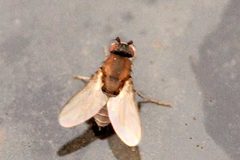
Small-bodied fly, typical of Sphaeroceridae. The specific epithet 'ferruginata' refers to a rusty or reddish-brown coloration.
Habitat
Associated with decaying organic matter, including and compost. Specific microhabitat preferences for this are not well documented.
Distribution
Europe; recorded from the Azores (Faial, Flores, Pico, São Jorge, São Miguel).
Ecological Role
Member of the saprobic associated with decomposing organic matter. Likely contributes to nutrient cycling, though specific ecological functions for this are not documented.
Human Relevance
No documented direct interactions with humans. Like other sphaerocerids, may occur in agricultural or urban settings where organic waste accumulates.
Similar Taxa
- Other Coproica speciesRequire dissection of male genitalia for reliable separation; external characters overlap significantly
- Other Sphaeroceridae generaShare small size and association with decaying matter; genitalic and wing venation characters needed for generic assignment
More Details
Taxonomic note
The classification (Limosininae) follows recent treatments of Sphaeroceridae, though subfamily boundaries in this have been historically fluid.