
Tephrochlamys rufiventris
(Meigen, 1830)
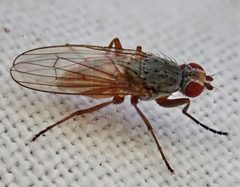
Tephrochlamys rufiventris is a small fly in the Heleomyzidae, measuring 5–6 mm in body length. It is distributed across the Palearctic region, with records from Scandinavia, Denmark, Sweden, Norway, and Madeira Island. The is characterized by distinctive thoracic setal arrangements and wing venation features useful for identification.
Pronunciation
How to pronounce Tephrochlamys rufiventris: /ˌtɛfroʊˈklæmɪs ˌruːfaɪˈvɛntrɪs/
These audio files are automatically generated. While they are not always 100% accurate, they are a good starting point.
Identification
Distinguished from related Heleomyzidae by the combination of: propleural setae present; prothorax bare; metathoracic setae in 0+3 arrangement with first pair closer to suture than to second pair; and metathoracic setae subequal in length; more than four rows of hairs between metathoracic setae; short monochromatic pterostigmas; costal spine-like bristles exceeding hair length; and single well-developed spur on each middle tibia. These characters require examination under magnification and reference to specialized Diptera literature.
Images
Appearance
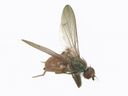
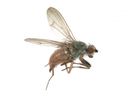
Small fly with body length of 5–6 mm. bears both setae and bristles on the gena. with setae present on the ; prothorax bare; metathoracic setae arranged 0+3, with the first pair of setae positioned closer to the suture than to the second pair. and metathoracic setae nearly equal in length; hairs between them arranged in more than four rows. Wings with short, monochromatic pterostigmas; costal bearing spine-like bristles longer than the adjacent hairs. Middle tibiae each with one well-developed spur.
Distribution
Palearctic region. Documented occurrences include Denmark, Norway, Sweden, and Madeira Island (Portugal).
More Details
Nomenclature
Originally described by Meigen in 1830. The epithet 'rufiventris' (Latin: rufus = red, venter = belly) likely refers to reddish abdominal coloration, though this is not explicitly confirmed in available sources.
Sources and further reading
- BugGuide
- Wikipedia
- GBIF taxonomy match
- iNaturalist taxon
- NCBI Taxonomy
- Catalogue of Life
- Eastern Red-Bellied Tiger Beetle | Beetles In The Bush
- Bug Eric: Wasp Wednesday: Another Puzzler
- August | 2010 | Beetles In The Bush | Page 2
- Buprestidae type specimens at Fundación Miguel Lillo, Argentina | Beetles In The Bush
- Collection Inventory update | Beetles In The Bush
- Eavesdropping Bees Encouraged by "Whispers," Deterred by "Shouts"
- Novel Biology for Tephrochlamys rufiventris (Meigen, 1830) (Diptera: Heleomyzidae)