
Tephrochlamys
Loew, 1862
Species Guides
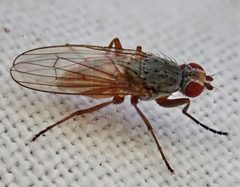
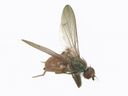
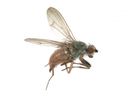
4Tephrochlamys is a of flies in the Heleomyzidae, established by Loew in 1862. within this genus are small-bodied flies, with Tephrochlamys rufiventris measuring 5–6 mm in body length. The genus is characterized by distinctive thoracic chaetotaxy and wing venation features. It occurs in the Palearctic region.
Pronunciation
How to pronounce Tephrochlamys: /ˌtɛfroʊˈklæmɪs/
These audio files are automatically generated. While they are not always 100% accurate, they are a good starting point.
Identification
Distinguished from similar Heleomyzidae by the specific arrangement of metathoracic setae (0+3 with first pair positioned closer to the suture), the subequal length of and metathoracic setae, and the dense hair arrangement between them (more than four rows). The combination of short monochromatic pterostigmas, spine-like costal bristles exceeding hair length, and a single spur on each middle tibia provides additional diagnostic characters. These chaetotaxy and wing features are critical for -level identification within Heleomyzidae.
Images
Appearance
Small flies, body length approximately 5–6 mm. with both setae and bristles on the gena. with setae on the , bare prothorax, and metathoracic setae arranged 0+3 with the first pair of setae positioned closer to the suture than to the second pair. and metathoracic setae nearly equal in length, with more than four rows of hairs between them. Wings with short, monochromatic pterostigmas; costal bearing spine-like bristles longer than the hairs. Middle tibiae each with one well-developed spur.
Distribution
Palearctic region. Distribution records exist for Denmark (DK), Norway (NO), and Sweden (SE).
Similar Taxa
- Other Heleomyzidae generaSimilar overall body plan and size; distinguished by specific thoracic chaetotaxy patterns, particularly the 0+3 metathoracic setae arrangement and positioning of the first pair relative to the suture.
More Details
Morphological terminology
The original description uses specialized dipteran morphological terms: gena (cheek region of ), (lateral plates of prothorax), prothorax (first thoracic segment), metathoracic setae (bristles on third thoracic segment), pterostigma (thickened colored on wing margin), and costal (leading edge vein of wing).