
Themira nigricornis
(Meigen, 1826)
black scavenger fly
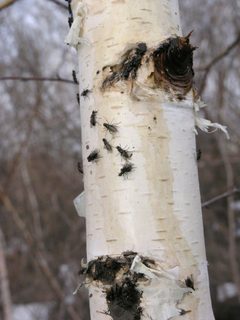
Themira nigricornis is a of black scavenger fly in the Sepsidae, first described by Meigen in 1826. It is native to Europe with records across western, central, eastern, and northern regions, and has been introduced to the Nearctic region including the United States. The species was first documented in south-eastern Europe in 2014 from an urban site in Bucharest, Romania, representing the southernmost European location for the species. are necrophagous and have been observed on decomposing animal carcasses.
Pronunciation
How to pronounce Themira nigricornis: //ˈθɛ.mɪ.rə ˌnɪ.ɡɪˈkɔːr.nɪs//
These audio files are automatically generated. While they are not always 100% accurate, they are a good starting point.
Identification
can be taxonomically characterized through morphological features and identified using of the COI gene, with sequences showing 99% identity to known T. nigricornis specimens. As a member of Sepsidae, it shares -level characteristics including a distinctive wing venation and body form typical of black scavenger flies.
Images
Habitat
Recorded from urban park settings with arboreal vegetation including Aesculus hippocastanum, Tilia sp., and Ulmus sp., with rich cover of small plants and shrubs. The Romanian record came from a temperate climate region at 100 m above sea level. Baited collections used domestic pig carcasses in advanced decomposition stage placed on soil ground surrounded by vegetation.
Distribution
Europe: Austria, Great Britain, Czech Republic, Denmark, Finland, France, Germany, Hungary, Latvia, Lithuania, Norway, Poland, Russia, Slovakia, Sweden, Switzerland, Netherlands, Ukraine, Italy, and Romania (first record in south-eastern Europe, 2014). Nearctic: USA (Alaska, Connecticut, Illinois, Maryland, Massachusetts, New Hampshire, New Jersey, New York, Pennsylvania). Palaearctic Asia: Kazakhstan, Korea, Kyrgyzstan, Pakistan, Turkmenistan, South Korea, Japan.
Seasonality
active in spring when temperatures reach approximately 20°C. In Romania, collected in the second half of April during midday period.
Diet
Necrophagous; feeds on animal decaying material. have been observed on domestic pig carcasses in advanced decomposition stage, specifically around the segment.
Behavior
exhibit relatively low abundance, with only 10 specimens (7 males, 3 females) collected over a two-week interval in the Romanian study. Found simultaneously with other necrophagous from Calliphoridae, Muscidae, Cleridae, and Silphidae.
Ecological Role
Contributes to decomposition processes of animal decaying material. As a member of Sepsidae, it likely plays a role in faeces decomposition processes, though this is inferred from -level characteristics rather than -specific observations.
More Details
Taxonomic verification
The Romanian specimens were identified through both morphological characterization and using the COI gene, with 99% sequence identity confirming the identification.
Collection method
Specimens were collected using an experimental setting with consisting of domestic pig carcass in advanced decomposition stage, with visiting located around the segment of the carcass.
Sources and further reading
- BugGuide
- Wikipedia
- GBIF taxonomy match
- iNaturalist taxon
- NCBI Taxonomy
- Encyrtid Holdings | Entomology Research Museum
- Bug Eric: Tiny Wasp Hero Slays Redback Spiders in Australia
- Bug Eric: Tree Cricket Courtship
- First Record of Themira Nigricornis (Meigen, 1826) (Sepsidae: Diptera) in Romania/ Prima semnalare a speciei Themira Nigricornis (Meigen, 1826) (Sepsidae: Diptera) în România