
Themira lohmanus
Ang, 2017
Lohman's ensign-fly
A relatively large and robust sepsid fly described in 2017 from two urban parks in New York City. Originally collected in 2007 and misidentified as Themira biloba, it was recognized as a distinct through morphological differences (asymmetrical male surstyli), 4.46% COI divergence, and complete post-zygotic reproductive isolation. The species is notable as the first new Themira species described from the Nearctic in 90 years despite occurring in one of the world's most intensively studied urban areas.
Pronunciation
How to pronounce Themira lohmanus: //θɛˈmaɪ.rə loʊˈmɑː.nəs//
These audio files are automatically generated. While they are not always 100% accurate, they are a good starting point.
Identification
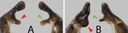
Distinguished from the closely related Themira biloba by asymmetrical male surstyli (symmetrical in T. biloba), 4.46% COI barcode divergence, and reproductive incompatibility (hybrid fail to hatch). Body is black with a cupreous shiny tinge on .
Images
Habitat
Urban parks with waterfowl ; specifically documented from Central Park (Harlem Meer) and Prospect Park in New York City. Breeds exclusively on waterfowl , particularly where ducks and geese concentrate on dry land due to public feeding. Hypothesized to be rare or absent in natural environments lacking concentrated waterfowl activity.
Distribution
Currently known only from two localities in New York City, USA: Central Park, Manhattan (40.7978°N, 73.9536°W, ~20m elevation) and Prospect Park, Brooklyn (40.6563°N, 73.9686°W).
Diet
Larvae develop on waterfowl (duck and goose) . have been maintained on concentrated sugar water in laboratory culture; wild adult feeding habits not documented.
Life Cycle
laid in clutches of 10–20. Development from egg to occurs within approximately three weeks: larvae emerge within three days, form within one week, and adults eclose shortly thereafter. Sexual maturity reached 2–5 days after adult .
Behavior
Mating similar to T. biloba: males mount females, perform courtship with genital contact, and engage in extended copulation averaging ~1 hour 37 minutes, followed by brief separation. Mating success rate in laboratory trials approximately 45%.
Ecological Role
Decomposer; contributes to nutrient cycling by processing waterfowl in urban park .
Human Relevance
Named in honor of David Lohman, entomologist at City College of New York. Serves as an example of cryptic urban biodiversity and the potential for new discovery even in heavily studied metropolitan areas.
Similar Taxa
- Themira bilobaClosely related from which T. lohmanus was originally misidentified; distinguished by symmetrical male surstyli, lower genetic divergence, and reproductive compatibility within the species.
Sources and further reading
- BugGuide
- Wikipedia
- GBIF taxonomy match
- Catalogue of Life
- Hidden in the urban parks of New York City: Themira lohmanus, a new species of Sepsidae described based on morphology, DNA sequences, mating behavior, and reproductive isolation (Sepsidae, Diptera)
- Figure 1 from: Ang Y, Rajaratnam G, Su KFY, Meier R (2017) Hidden in the urban parks of New York City: Themira lohmanus, a new species of Sepsidae described based on morphology, DNA sequences, mating behavior, and reproductive isolation (Sepsidae, Diptera). ZooKeys 698: 95-111. https://doi.org/10.3897/zookeys.698.13411
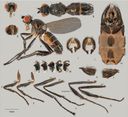
- Figure 3 from: Ang Y, Rajaratnam G, Su KFY, Meier R (2017) Hidden in the urban parks of New York City: Themira lohmanus, a new species of Sepsidae described based on morphology, DNA sequences, mating behavior, and reproductive isolation (Sepsidae, Diptera). ZooKeys 698: 95-111. https://doi.org/10.3897/zookeys.698.13411
- Supplementary material 1 from: Ang Y, Rajaratnam G, Su KFY, Meier R (2017) Hidden in the urban parks of New York City: Themira lohmanus, a new species of Sepsidae described based on morphology, DNA sequences, mating behavior, and reproductive isolation (Sepsidae, Diptera). ZooKeys 698: 95-111. https://doi.org/10.3897/zookeys.698.13411
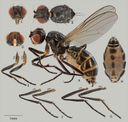
- Figure 2 from: Ang Y, Rajaratnam G, Su KFY, Meier R (2017) Hidden in the urban parks of New York City: Themira lohmanus, a new species of Sepsidae described based on morphology, DNA sequences, mating behavior, and reproductive isolation (Sepsidae, Diptera). ZooKeys 698: 95-111. https://doi.org/10.3897/zookeys.698.13411