
Bittacomorpha
Westwood, 1835
phantom crane flies
Species Guides
2- Bittacomorpha clavipes(Eastern Phantom Crane Fly)
- Bittacomorpha occidentalis(Western Phantom Crane Fly)
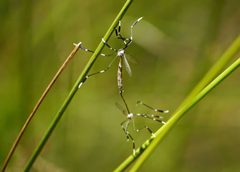
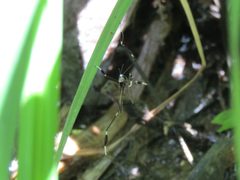
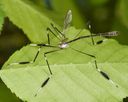
Bittacomorpha is a of phantom crane flies in the Ptychopteridae, containing approximately 11 described . These insects are distinguished by their elongated legs with striking black-and-white banding and a distinctive floating pattern. The genus includes the well-known Bittacomorpha clavipes, which has been studied for its aquatic larval in spring systems. are terrestrial and short-lived, while larvae inhabit flowing freshwater environments.
Pronunciation
How to pronounce Bittacomorpha: /ˌbɪtəkoʊˈmɔrfə/
These audio files are automatically generated. While they are not always 100% accurate, they are a good starting point.
Images
Habitat
Larvae inhabit aquatic environments with moderate flow, particularly spring runs and streams with detritus-rich substrates. are terrestrial and found in areas near larval sites.
Distribution
Recorded from North America including the Ozark region (U.S.A.) and Vermont.
Diet
Larvae likely feed on detritus and organic matter in aquatic environments based on association. feeding habits are poorly documented; some related crane flies consume little to no food as adults.
Life Cycle
Complete with aquatic larval stages and terrestrial . Larvae develop in flowing freshwater before emerging to mate and die within days.
Behavior
are known for a distinctive floating pattern where inflated ('feet') help support the long legs in the air. This flight style is characteristic of phantom crane flies and has been specifically noted in Bittacomorpha clavipes.
Ecological Role
Larvae function as part of the aquatic in spring and stream , contributing to organic matter processing.
Human Relevance
are harmless and do not bite or sting. Occasionally mistaken for large mosquitoes due to superficial resemblance, but lack piercing mouthparts.
Similar Taxa
- Tipulidae (true crane flies)Superficially similar long-legged appearance, but phantom crane flies in Ptychopteridae have distinct wing venation, different larval preferences, and the characteristic floating with inflated not seen in Tipulidae.
- Pediciidae (hairy-eyed crane flies)Another historically grouped with crane flies, but separated based on morphological and genetic evidence; differs in structure and lacks the distinctive leg and of Bittacomorpha.