
Agathon comstocki
(Kellogg, 1903)
Comstock's Net-winged Midge
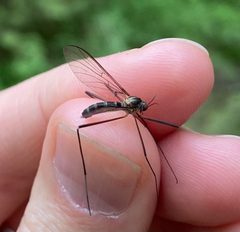
Agathon comstocki is a of net-winged midge in the Blephariceridae, described by Kellogg in 1903. The honors the American entomologist John Henry Comstock. Net-winged midges in this family are specialized for life in fast-flowing aquatic environments, with larvae adapted to cling to rocks in turbulent water. The species is rarely encountered and poorly documented in scientific literature.
Pronunciation
How to pronounce Agathon comstocki: /ˈæɡəˌθɒn kəmˈstɒki/
These audio files are automatically generated. While they are not always 100% accurate, they are a good starting point.
Identification
Distinguished from other Blephariceridae by wing venation patterns and genitalic structures visible under magnification. Separation from congeneric requires examination of male terminalia and female . The specific epithet comstocki distinguishes this from other Agathon species, but detailed comparative diagnostic features are not well documented in accessible literature. may be confused with other small nematoceran Diptera, but the reticulate wing venation is diagnostic for the .
Images
Habitat
Associated with lotic (flowing water) environments, particularly cool, well-oxygenated streams and rivers with rocky substrates. Larvae require clean, fast-flowing water with stable rock surfaces for attachment. are typically found near larval , often resting on riparian vegetation or rocks.
Distribution
Documented from North America; specific range details are sparse due to limited collecting effort and taxonomic attention. The type locality and precise distribution require verification from primary literature.
Seasonality
patterns are poorly documented. Most Blephariceridae show seasonal activity correlated with water temperature and flow regimes, typically spring through fall in temperate regions.
Life Cycle
Hemimetabolous development with , larva, pupa, and stages. Larvae are aquatic and undergo multiple instars. occurs in water, attached to substrates. Adults are terrestrial and short-lived. Specific details of developmental duration and voltinism are unknown.
Behavior
Larvae exhibit a distinctive looping locomotion, alternately attaching and releasing suckers to move across rock surfaces in fast currents. are weak fliers and typically remain near sites. Mating and oviposition are undocumented for this .
Ecological Role
Larvae function as grazers in headwater stream , consuming periphyton ( and associated microorganisms) from rock surfaces. They contribute to nutrient cycling and serve as prey for aquatic including fish and predatory . The Blephariceridae is considered an indicator of high-quality, minimally disturbed lotic .
Human Relevance
No direct economic importance. The is of interest to aquatic entomologists and biomonitoring programs assessing stream health. Not a pest or . Named in honor of John Henry Comstock, a foundational figure in American entomology.
Similar Taxa
- Other Agathon speciesCongeneric share similar wing venation and body form; reliable separation requires genitalic dissection and comparison with .
- Blepharicera speciesMembers of the related Blepharicera overlap in and general appearance; distinguished by details of wing venation and male genitalia.
- Other Nematocera (e.g., Chironomidae, Simuliidae)Small size and aquatic association may cause confusion, but Blephariceridae are immediately recognized by the dense reticulate wing venation absent in other .
More Details
Taxonomic history
Described by Vernon Lyman Kellogg in 1903. The specific epithet honors John Henry Comstock (1849-1931), professor of entomology at Cornell University and mentor to Kellogg. The has received minimal taxonomic attention since description.
Research limitations
Available sources provide minimal -specific information. Most biological knowledge is inferred from -level characteristics of Blephariceridae. Primary taxonomic literature and original description should be consulted for definitive information.