
Atacta brasiliensis
Schiner, 1868
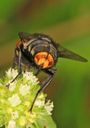
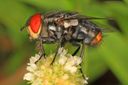
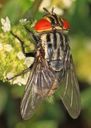
Atacta brasiliensis is a of bristle fly in the Tachinidae, a group of flies that attack other insects. The species was described by Schiner in 1868. It occurs across a broad geographic range in the Americas, from the southern United States through Central America to South America. As with most tachinid flies, its larvae are likely internal parasitoids of other insects, though specific records for this species appear to be undocumented in the available literature.
Pronunciation
How to pronounce Atacta brasiliensis: /əˈtæktə brəˌzɪliˈɛnsɪs/
These audio files are automatically generated. While they are not always 100% accurate, they are a good starting point.
Identification
Atacta brasiliensis belongs to the tribe Goniini within the Exoristinae, a diverse group of tachinid flies characterized by specific bristle patterns and body forms typical of bristle flies. Without detailed original description or diagnostic revision available, distinguishing this from relies on examination of type material and comparison with other Atacta species. The Atacta is distinguished within Goniini by particular arrangements of thoracic and abdominal bristles, though precise diagnostic features for A. brasiliensis specifically are not readily accessible in the provided sources.
Images
Distribution
United States, Trinidad and Tobago, Rica, Guatemala, Honduras, Mexico, Nicaragua, Panama, Brazil, Peru, Venezuela. The has been recorded across North, Central, and South America, indicating a broad Neotropical and southern Nearctic distribution.
Ecological Role
As a member of Tachinidae, Atacta brasiliensis likely functions as a in its , with larvae developing inside insects and contributing to of other arthropods. The specific ecological role and host range remain undocumented.
More Details
Taxonomic history
The was described by Ignaz Rudolph Schiner in 1868, a prominent Austrian entomologist who made significant contributions to dipteran . The specific epithet 'brasiliensis' refers to Brazil, one of the countries in its range, though this does not indicate Brazilian given its much broader distribution.
Collection records
The is represented in entomological collections, with distribution records spanning from the southern United States through Central America to northern South America. The broad geographic range suggests either high capability, association with widespread species, or possible cryptic diversity requiring further taxonomic investigation.
Sources and further reading
- BugGuide
- Wikipedia
- GBIF taxonomy match
- iNaturalist taxon
- NCBI Taxonomy
- Catalogue of Life
- Encyrtid Holdings | Entomology Research Museum
- Welcome Wasps: Parasitoids Show Promise for Management of Invasive Fruit Fly
- Thripidae | Beetles In The Bush
- The State of IPM for Spotted-Wing Drosophila
- Cyber catalogue and revision of the nematode genus Enchodelus