
Atacta
Schiner, 1868
Species Guides
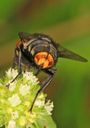
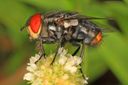
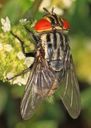
1Atacta is a of tachinid flies established by Schiner in 1868. The genus contains four described distributed in the Neotropical region. Like other members of the tribe Goniini, these flies are , though specific associations for Atacta species remain poorly documented.
Pronunciation
How to pronounce Atacta: /əˈtæk.tə/
These audio files are automatically generated. While they are not always 100% accurate, they are a good starting point.
Identification
Atacta can be distinguished from other Goniini by features of the male terminalia, particularly the structure of the and surstyli. The is characterized by a silvery or grayish front in some species (as reflected in the species name A. argentifrons). Accurate identification to species level requires examination of male genitalia and reference to original species descriptions.
Images
Distribution
Neotropical region. Documented from Brazil (A. brasiliensis, A. crassiceps), and additional described from unspecified localities in the Neotropics.
Ecological Role
. As members of the tribe Goniini, Atacta are presumed to be parasitoids of other insects, though specific records have not been published.
Similar Taxa
- Other Goniini generaAtacta shares the general morphological ground plan of the tribe Goniini, including the characteristic male terminalia structure. It is distinguished by specific configurations of the surstyli and , and by the presence of silvery pruinosity on the in some .
More Details
Taxonomic history
The was established by Ignaz Rudolph Schiner in 1868 with Atacta brasiliensis as the type . Three additional species were described by Aldrich (1925) and Townsend (1916). The genus has received limited taxonomic attention since its original description.
Species diversity
Four are currently recognized: Atacta argentifrons Aldrich, 1925; Atacta brasiliensis Schiner, 1868; Atacta crassiceps Aldrich, 1925; and Atacta crescentis (Townsend, 1916). No species have been added since 1925.