
Cordyligaster
Macquart, 1844
Species Guides
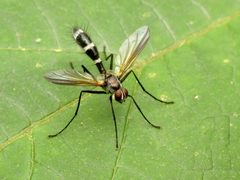
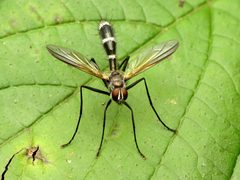
1Cordyligaster is a of bristle flies in the Tachinidae, first described by Macquart in 1844. in this genus are of caterpillars, with documented rearing records from leaf-rolling Crambidae . The genus occurs in Central and South America, with recent taxonomic work describing new species from Rica using integrated morphological and molecular approaches.
Pronunciation
How to pronounce Cordyligaster: /kɔːrˈdɪlɪˌɡæstər/
These audio files are automatically generated. While they are not always 100% accurate, they are a good starting point.
Images
Habitat
Tropical rain forest, tropical dry forest, and cloud forest . Documented collections from elevations of 390-440 m in Rican conservation areas. Occurs in forest intergrade zones.
Distribution
Central and South America. Documented from Rica (Area de Conservacion Guanacaste, Guanacaste Province), with -wide distribution extending across the Neotropics.
Host Associations
- Syngamia florella - Leaf-rolling caterpillar (Lepidoptera: Crambidae: Spilomelinae); all specimens of C. capellii reared from this
Life Cycle
development within caterpillar . flies emerge from host caterpillars. Host caterpillars collected at all instars in the wild and reared in captivity until parasitoid , host , or death.
Behavior
-specific of leaf-rolling caterpillars. Emerges from living caterpillar hosts.
Ecological Role
fly acting as agent of caterpillar . Regulates Crambidae populations in tropical forest .
Human Relevance
Potential agent for caterpillar pests. Subject of taxonomic research integrating , photography, , and molecular data.
Similar Taxa
- Other Tachinidae generaCordyligaster can be distinguished by male terminalia and CO1 gene sequences; belongs to tribe Cordyligastrini within Dexiinae
More Details
Taxonomic methodology
Recent descriptions for this employ integrated approaches combining external , male terminalia examination, photographic documentation, data, and CO1 gene sequencing.
Rearing records
First rearing records for the within Rica were published in 2014, documenting associations and providing new distribution data for previously described .