
Oxysarcodexia
Townsend, 1917
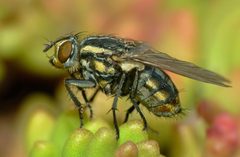
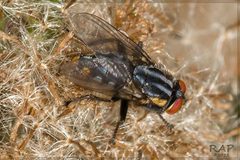
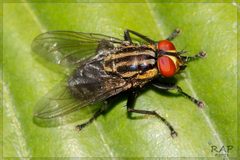
Oxysarcodexia is a -rich of flesh flies (Diptera: Sarcophagidae) comprising 91 valid species. The genus has its center of diversity in the Neotropical Region, with some species extending into the Nearctic and a few introduced to Australasian and Oceanian regions. Species are primarily -breeders, though some have been reared from vertebrate carcasses, giving the genus significant forensic importance. Male genitalia provide the only reliable characters for species identification.
Pronunciation
How to pronounce Oxysarcodexia: /ˌɒksɪˌsɑːrkəˈdɛksiə/
These audio files are automatically generated. While they are not always 100% accurate, they are a good starting point.
Identification
Identification to relies on characters typical of Sarcophagidae: dull gray coloration with three longitudinal black stripes on the , with two strong and two small setae (Calliphoridae have only two setae), and meron with a row of setae (lacking in Muscidae). -level identification requires examination of male terminalia due to uniform chaetotaxy and lack of useful external characters across the genus.
Images
Distribution
Neotropical Region (center of diversity); Nearctic Region (some ); Australasian and Oceanian Regions (few introduced species). Documented from Argentina, Brazil, Colombia, Rica, Ecuador, French Guiana, Paraguay, Peru, and other countries. In Brazil, recorded from Atlantic Forest fragments and coastal environments.
Seasonality
Apparent preference for rainy season observed in Brazilian Atlantic Forest ; activity during final stages of carcass decomposition.
Diet
Primarily (); necrophagous on vertebrate carcasses (some ).
Host Associations
- Sus scrofa - carrion resourcepig carcasses used for studies
Life Cycle
Larvae develop in or decomposing vertebrate carcasses. of carcasses occurs preferentially during advanced deterioration and remains stages rather than initial decomposition stages.
Ecological Role
Decomposer of and carrion. Forensic importance for estimating postmortem interval in legal investigations.
Human Relevance
: presence and developmental stage of larvae used to estimate time since death. Some among the most common flesh flies encountered in carcass studies.
Similar Taxa
- SarcophagaBoth are gray-striped sarcophagid flies with similar general appearance; distinguished by male genitalia structure
- TricharaeaCo-occurs on carrion and ; Oxysarcodexia distinguished by specific chaetotaxy patterns and genitalic characters
More Details
Taxonomic challenges
No suitable key for identifying Neotropical exists without analysis of male terminalia. Four described solely from females (O. aureiceps, O. dorisae, O. flavifrons, O. neivae) remain of uncertain status pending comprehensive study of female .
Synonymies
Asioboettcheria Verves, 2001 synonymized with Oxysarcodexia; O. cuernavaca synonymized with O. ventricosa; Stackelbergeola papei synonymized with O. thornax.
Sources and further reading
- BugGuide
- Wikipedia
- GBIF taxonomy match
- iNaturalist taxon
- NCBI Taxonomy
- Catalogue of Life
- Diptera | Beetles In The Bush | Page 7
- Oxysarcodexia Townsend, 1917 (Diptera: Sarcophagidae)—a centennial conspectus
- Espécies de Oxysarcodexia (Diptera: Sarcophagidae) associadas a carcaças de suínos (Sus scrofa Linnaeus) expostas em um fragmento de Mata Atlântica no município de Salvador, Bahia