
Wohlfahrtia
Brauer & Bergenstamm, 1889
Species Guides
1- Wohlfahrtia vigil(fox maggot)
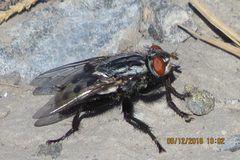
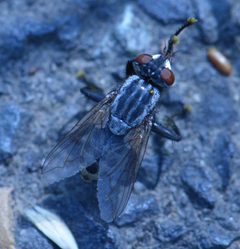
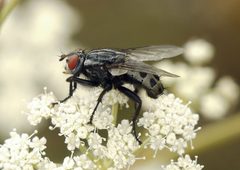
Wohlfahrtia is a of flesh flies in the Sarcophagidae comprising at least 20 described . Species within this genus are known facultative that cause traumatic myiasis in mammals, including livestock and humans. Larvae develop in wounds or necrotic tissue, with some species serving as forensic indicators for postmortem interval estimation. The genus exhibits larviparous , with females depositing larvae directly onto suitable substrates.
Pronunciation
How to pronounce Wohlfahrtia: //vɔlfˈvaːr.ti.a//
These audio files are automatically generated. While they are not always 100% accurate, they are a good starting point.
Images
Diet
Larvae feed on necrotic tissue of wounds; laboratory rearing has used fresh beef as substrate.
Host Associations
- humans - facultative causing traumatic myiasis
- livestock - facultative causing traumatic myiasis
- horses (Equus caballus) - facultative causing traumatic myiasisWohlfahrtia magnifica specifically recorded from vulvar wounds in Hungary
Life Cycle
Larviparous: females deposit larvae directly onto substrate. Three larval instars occur, followed by prepupal stage and in soil. In Wohlfahrtia nuba, first instar larvae measure approximately 4.95 mm length with cephalopharyngeal skeleton 1.63 mm; bear 8 papillae in first instar, 10 in second, 11 in third; spiracles have two incomplete peritremes with slit count increasing from 1 to 2 to 3 across instars. First instar larvae are and penetrate wound tissue; later instars remain non-invasive within the wound.
Behavior
flies are attracted to decomposing corpses and serve as early colonizers of decomposition. First instar larvae actively penetrate wound tissue; later instars remain localized within wounds. Wohlfahrtia magnifica adults in Hungary are active May through September. Gravid females are attracted to wound sites, possibly by volatile chemical cues associated with tissue inflammation or physiological states.
Ecological Role
Facultative causing traumatic myiasis in mammals; contributes to decomposition as early colonizer of carrion. Forensic for postmortem interval estimation.
Human Relevance
Causes traumatic myiasis in humans and domestic animals, particularly livestock. Wohlfahrtia magnifica in horses can cause severe tissue destruction and secondary , requiring veterinary intervention. Forensic importance for criminal investigations and death scene analysis.
Sources and further reading
- BugGuide
- Wikipedia
- GBIF taxonomy match
- iNaturalist taxon
- NCBI Taxonomy
- Catalogue of Life
- Morphological Description of the Three Larval Instars of Wohlfahrtia nuba (Diptera: Sarcophagidae)
- Traumatic myiasis of horses caused by Wohlfahrtia magnifica
- Observations on the Behaviour of the Sarcophagid Fly, Wohlfahrtia vigil (Walk.)
- Rearing and Biology of Wohlfahrtia vigil (Diptera: Sarcophagidae)1