
Macronychia
Rondani, 1859
satellite flies
Species Guides
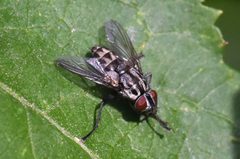
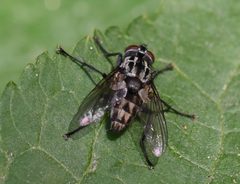
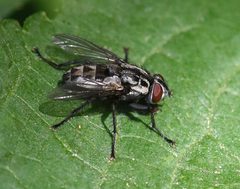
1- Macronychia aurata(satellite fly)
Macronychia is a of satellite flies in the Sarcophagidae, first described by Rondani in 1859. The genus comprises at least 20 described . These flies are kleptoparasitic, meaning they exploit the food resources or nesting provisions of other organisms rather than collecting their own. They are associated with solitary bees and , where they lay in or near nests.
Pronunciation
How to pronounce Macronychia: //ˌmækrəˈnɪkiə//
These audio files are automatically generated. While they are not always 100% accurate, they are a good starting point.
Identification
Macronychia are recognized as satellite flies by their association with nests and kleptoparasitic . They resemble other sarcophagid flies in general body plan but are distinguished by their specific ecological relationships with solitary bees and . Accurate species-level identification requires examination of male terminalia and other microscopic features.
Images
Habitat
Found in environments where solitary bees and nest, including sandy soils, bare ground, and vertical banks used by tunnel-nesting Hymenoptera.
Distribution
Records exist from Denmark (DK), Norway (NO), and Sweden (SE). The likely has a broader Palearctic distribution given its associations.
Seasonality
Activity coincides with the nesting periods of bees and , primarily spring through summer in temperate regions.
Diet
Larvae feed on provisions stored in nests, including pollen and nectar collections intended for host offspring. feed on nectar and other sugary liquids.
Host Associations
- solitary bees - kleptoparasite laid in or near nests
- solitary wasps - kleptoparasiteexploits provisions stored for larvae
Life Cycle
Females deposit larvae near or within nests. Larvae consume the food stores intended for host offspring, completing development within the host . occurs in the soil or within the host nest. Specific details on time and stage vary by and are not well documented.
Behavior
Females exhibit satellite , following females to locate nests. They may enter host nests during temporary absences of the host to deposit larvae. This kleptoparasitic strategy eliminates the need to forage for provisions.
Ecological Role
Acts as a kleptoparasite on solitary bees and , potentially reducing reproductive success. Contributes to nutrient cycling through larval feeding on organic provisions.
Human Relevance
No direct economic importance. Occasionally noted in studies of and . Not a pest of humans or domestic animals.
Similar Taxa
- MiltogrammaAnother of satellite flies in Sarcophagidae with similar kleptoparasitic ; distinguished by morphological details of the male genitalia and specific associations
- SenotainiaRelated sarcophagid with satellite fly ; Macronychia differs in specific morphological characters and preferences
More Details
Etymology
The name Macronychia derives from Greek roots, likely referring to elongated claws or nail-like structures, though the specific etymological reference is not clearly documented in available sources.