
Compsomyiops callipes
(Bigot, 1877)
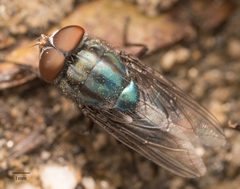
Compsomyiops callipes is a blowfly in the Calliphoridae, previously classified as Paraluclia wheeleri. It is a warm-weather found in the southwestern United States and parts of South America. The species is identifiable by its metallic blue coloration and specific morphological features including club-shaped palps and brown calypters.
Pronunciation
How to pronounce Compsomyiops callipes: /kɔmpˈsɒmiˌɒps kəˈlaɪpiːz/
These audio files are automatically generated. While they are not always 100% accurate, they are a good starting point.
Identification
Distinguished from similar blowflies by combination of metallic blue color, club-shaped palps, brown calypters, and specific chaetotaxy patterns. These features separate it from and other metallic Calliphoridae in the same range.
Images
Appearance
Metallic blue body coloration. Club-shaped palps. Brown calypters (small flap-like structures at the base of the wings). Chaetotaxy (arrangement of bristles) is a key diagnostic feature.
Distribution
Southwestern United States; parts of South America
Seasonality
Active during warm weather periods
Similar Taxa
- Other Compsomyiops speciesShare and general ; require examination of chaetotaxy, palp shape, and calypter color for separation
- Other metallic blue CalliphoridaeSimilar coloration; distinguished by club-shaped palps and brown calypters unique to C. callipes
More Details
Taxonomic history
Originally described as Somomya callipes by Bigot in 1877. Previously treated under the Paraluclia as P. wheeleri before reclassification to Compsomyiops.