
Compsomyiops
Townsend, 1918
Species Guides
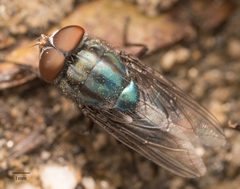
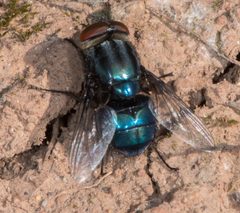
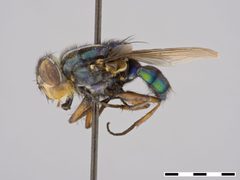
1Compsomyiops is a of blowflies (Diptera: Calliphoridae) established by Townsend in 1918. Members are necrophagous and serve as important forensic indicators for postmortem interval estimation. The genus has been documented as a phoretic for Myianoetus mites (Acari: Histiostomatidae), representing a novel association for these mites. At least two are recognized: C. fulvicrura in South America and C. wheeleri in North America.
Pronunciation
How to pronounce Compsomyiops: /kɔmpsoʊˈmaɪɒps/
These audio files are automatically generated. While they are not always 100% accurate, they are a good starting point.
Images
Habitat
Carrion-associated environments; documented from the Prepuna ecoregion of Jujuy, Argentina for C. fulvicrura, where specimens were collected using necrotraps baited with bovine lung.
Distribution
Neotropical and Nearctic regions; C. fulvicrura recorded from Jujuy Province, Argentina; C. wheeleri occurs in North America.
Diet
Necrophagous; attracted to and feeds on carrion, as demonstrated by collection on bovine lung .
Host Associations
- Myianoetus sp. - phoretic Deutonymphs of these mites attach to fly body for via ; first documented association between Myianoetus and Calliphoridae
Life Cycle
Larval stage described for C. wheeleri; complete (holometabolous) inferred from -level characteristics but not explicitly documented for .
Behavior
Serves as for phoretic mites; significant seasonal and geographic variation observed in mite load intensity.
Ecological Role
Decomposer in carrion ; forensic supporting postmortem interval estimation; facilitates mite through phoretic associations.
Human Relevance
Forensic importance for estimating time of death in criminal investigations; potential value in developing more precise forensic methods based on mite-fly associations.
Similar Taxa
- Other Calliphoridae generaShares necrophagous habits and forensic relevance; distinguished by specific morphological features and geographic distribution not detailed in available sources.
Sources and further reading
- BugGuide
- GBIF taxonomy match
- iNaturalist taxon
- NCBI Taxonomy
- Catalogue of Life
- The Biology of Compsomyiops Wheeleri (Hough) and Description of the Larva
- Association of Myianoetus sp. (Acari: Histiostomatidae) with necrophagous fly Compsomyiops fulvicrura (Diptera: Calliphoridae), in the Prepuna ecoregion (Jujuy: Argentina)