
Mydaeinae
Genus Guides
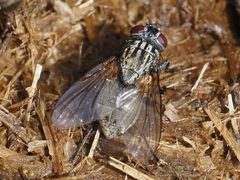
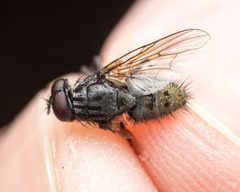
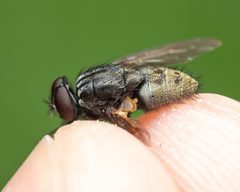
5Mydaeinae is a of true flies within the Muscidae. The subfamily comprises eight recognized including Brontaea, Graphomya, Hebecnema, Hemichlora, Mydaea, Myospila, Scenetes, and Scutellomusca. Members of this subfamily are morphologically diverse and occupy various . The genus Mydaea is particularly well-represented in observations, suggesting it may be among the more commonly encountered groups. Mydaeinae flies share the general muscid body plan but exhibit distinctive characteristics that warrant their separation from other muscid subfamilies.
Pronunciation
How to pronounce Mydaeinae: /ˌmɪˈdaɪɪnaɪ/
These audio files are automatically generated. While they are not always 100% accurate, they are a good starting point.
Identification
Mydaeinae can be distinguished from other Muscidae by specific combinations of bristle patterns, wing venation details, and genitalic structures, though precise diagnostic features vary by . The genus Graphomya is recognizable by patterned wings with dark markings. Mydaea often show distinctive thoracic coloration and chaetotaxy. Myospila species are characterized by particular arrangements of postalar and dorsocentral bristles. Definitive identification to genus level typically requires examination of male terminalia under magnification.
Images
Habitat
vary considerably across the . Graphomya are frequently associated with wetland margins and riparian vegetation. Mydaea species occupy diverse environments including forests, grasslands, and anthropogenic habitats. Myospila species have been recorded from both natural and disturbed habitats. Specific microhabitat preferences for most remain poorly documented.
Distribution
The has a worldwide distribution. Individual show varying geographic ranges: Brontaea is primarily Palearctic and Oriental; Graphomya is nearly ; Hebecnema is mainly Holarctic with some Oriental representation; Hemichlora is restricted to the Neotropical region; Mydaea is widespread across the Palearctic, Nearctic, and Oriental regions; Myospila is primarily Palearctic and Oriental; Scenetes is known from the Oriental and Australasian regions; Scutellomusca is Neotropical.
Similar Taxa
More Details
Taxonomic History
The has undergone various reclassifications, with some formerly placed in other muscid groups based on superficial similarities. Modern classifications rely heavily on male genitalic characters.