
Neodexiopsis calopyga
(Loew, 1872)
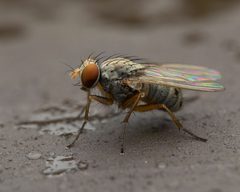
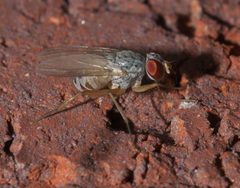
Neodexiopsis calopyga is a of muscid fly in the Coenosiinae. The species was originally described as Coenosia calopyga by Loew in 1872 and later transferred to the Neodexiopsis. Like other members of Coenosiinae, it belongs to a group of predatory muscid flies rather than the house flies in subfamily Muscinae.
Pronunciation
How to pronounce Neodexiopsis calopyga: /niːoʊˌdɛksiˈɒpsɪs kælɵˈpaɪɡə/
These audio files are automatically generated. While they are not always 100% accurate, they are a good starting point.
Identification
Members of Neodexiopsis can be distinguished from related by genitalic characters, particularly features of the male terminalia. The specific epithet 'calopyga' refers to the well-developed or 'beautiful' pygophore (male genital clasper structure). Accurate identification to level requires examination of male genitalia and comparison with or detailed illustrations.
Images
Distribution
Recorded from the Nearctic region based on taxonomic literature; specific locality data requires verification from primary sources.
Ecological Role
As a member of Coenosiinae, this likely functions as a of other small , though direct observations have not been documented in the provided sources.
Similar Taxa
- NeodexiopsisOther in the same share similar general and require genitalic examination for separation; N. calopyga is distinguished by specific pygophore characteristics.
- CoenosiaHistorically classified in this ; separation from current Coenosia depends on revised generic concepts and genitalic .
- Muscinae (house flies)Superficially similar muscids but belong to a different with distinct ecological habits; Coenosiinae are predatory rather than scavenging or haematophagous.
More Details
Taxonomic History
Originally described as Coenosia calopyga Loew, 1872, this was later transferred to Neodexiopsis following revisionary work on Coenosiinae. The basionym is preserved in taxonomic databases.
Observation Data
iNaturalist records 166 observations, indicating the is documented by citizen scientists, though these require expert verification for research-grade status.