Coenosia tigrina
(Fabricius, 1775)
Common Tiger Fly, Hunter Fly, Killer Fly
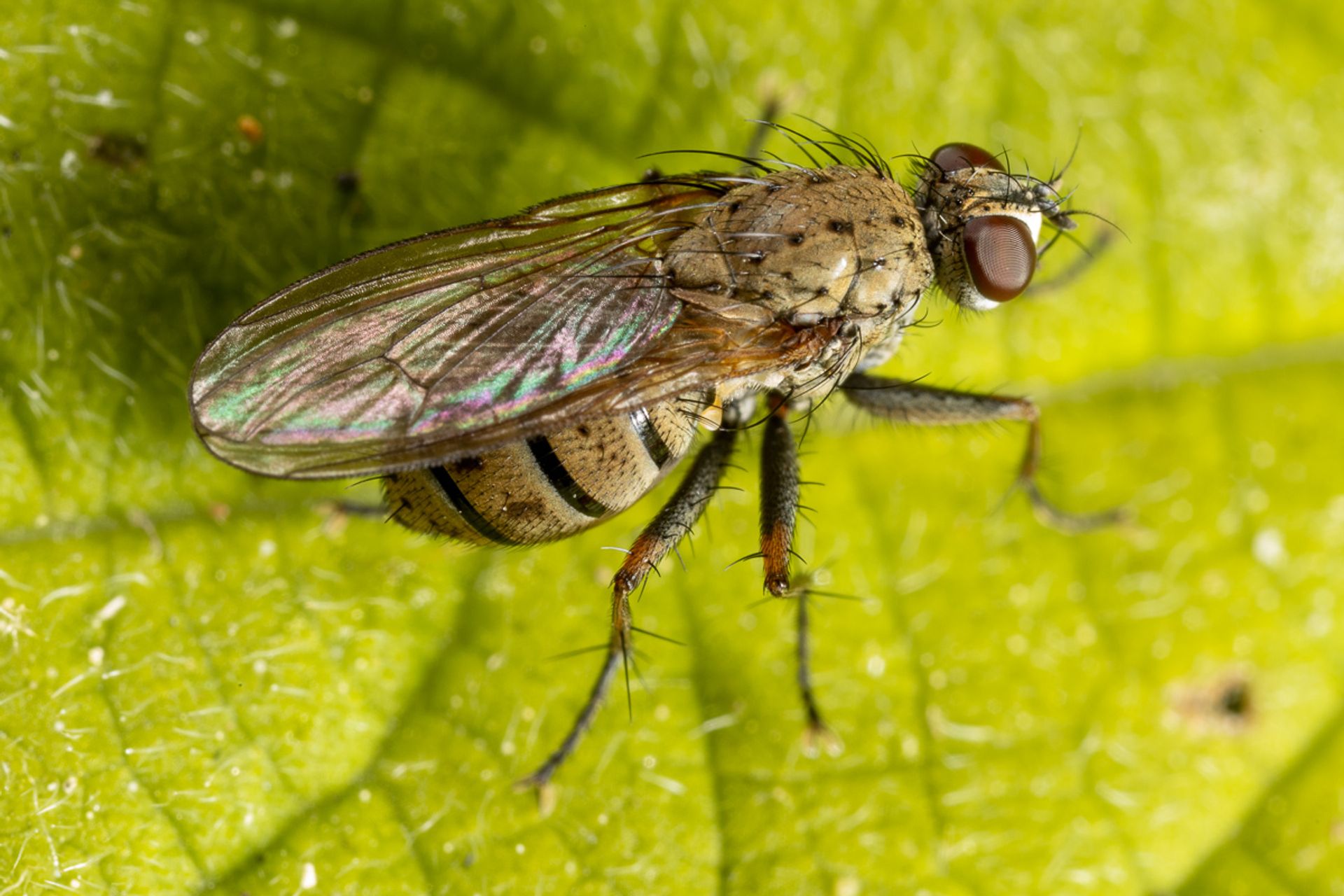
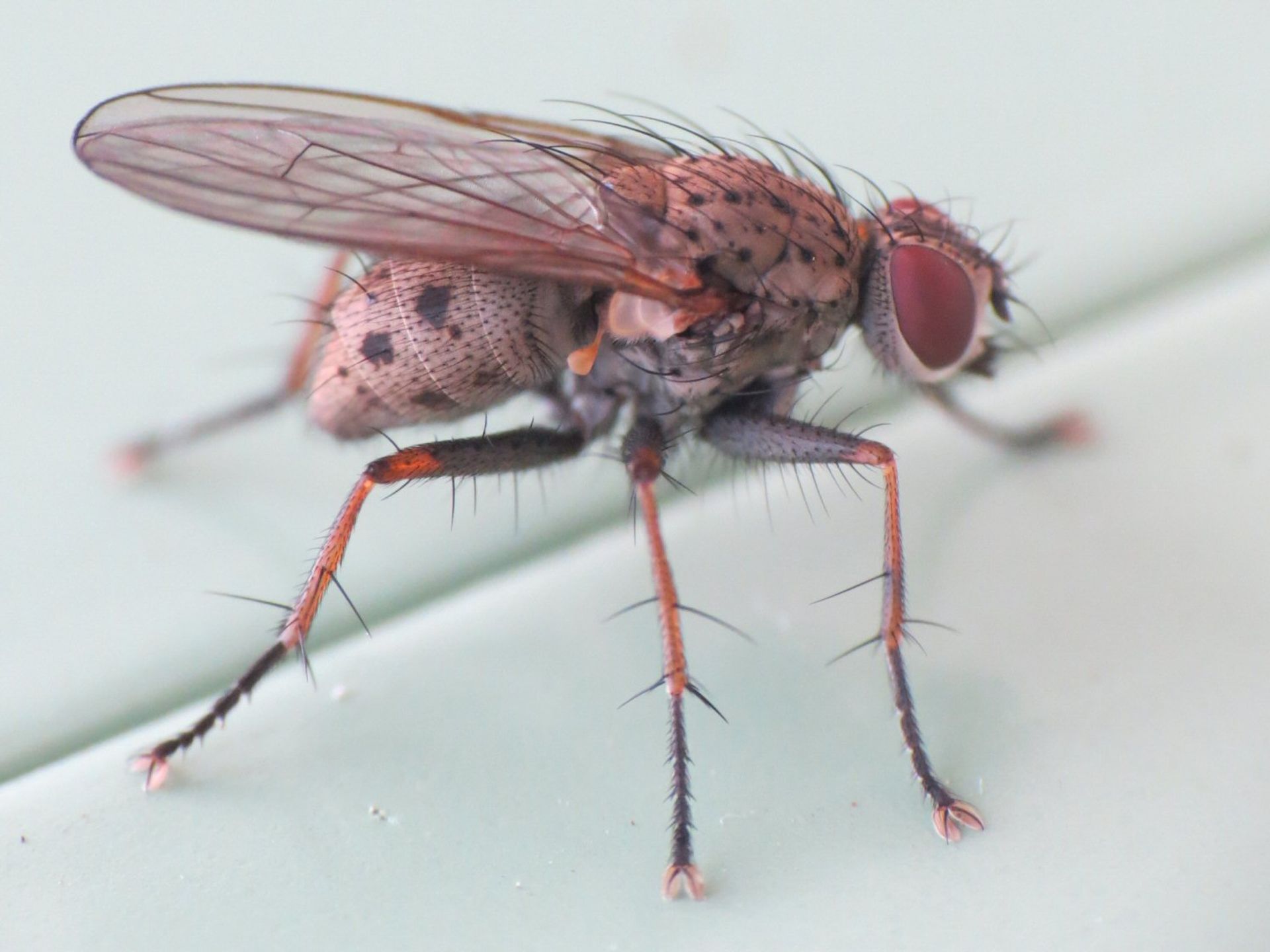
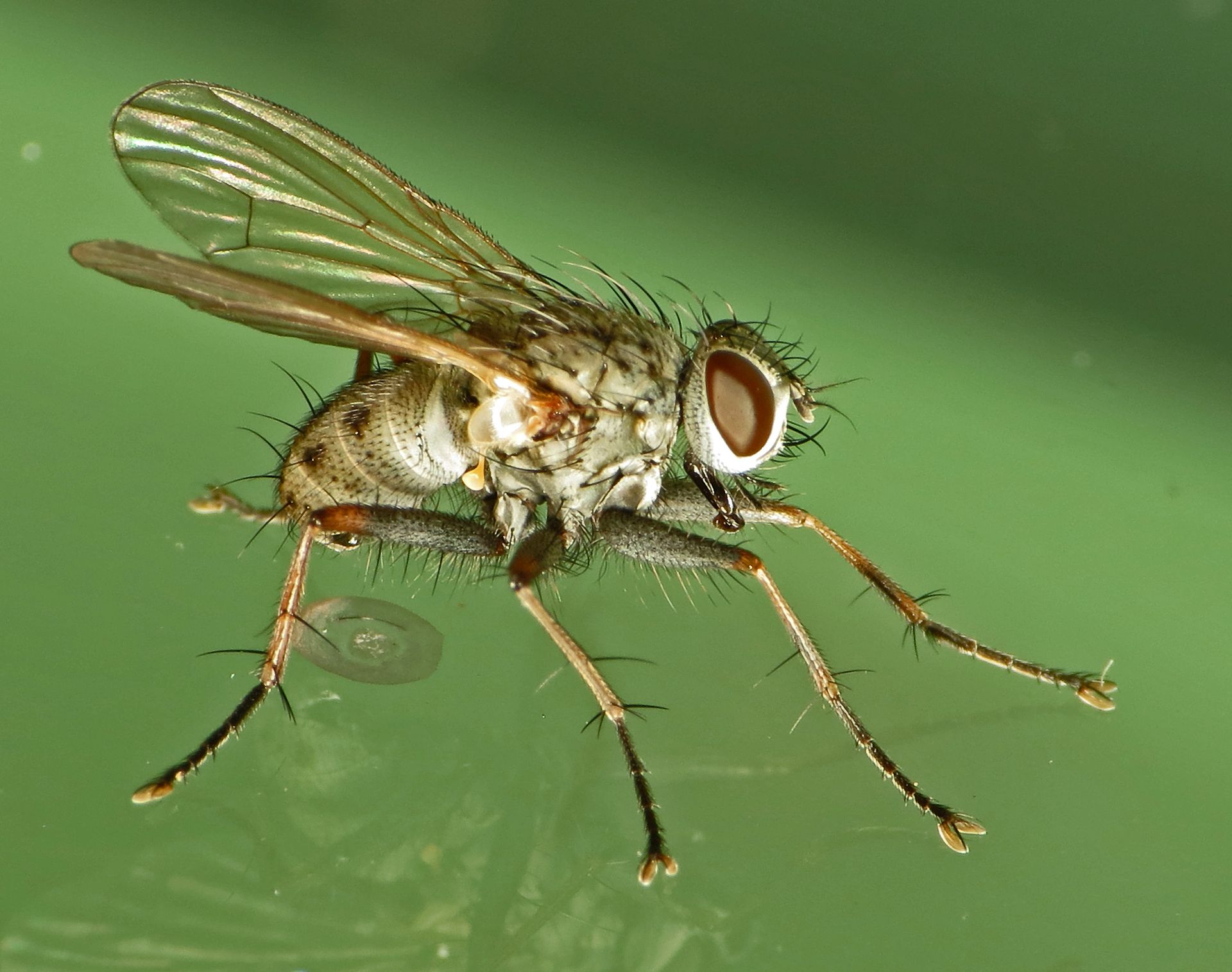
Coenosia tigrina is a predatory muscid fly whose actively hunt flying insects, including pest Diptera such as frit flies (Chloropidae) and onion maggot flies. The has been documented as a agent in agricultural systems. Larvae are specialized of earthworms, penetrating the and feeding internally on circulatory and chloragogenous tissues. It occurs across the Palearctic region with three per year in temperate North America.
Pronunciation
How to pronounce Coenosia tigrina: /kɪˈnəʊsiə taɪˈɡriːnə/
These audio files are automatically generated. While they are not always 100% accurate, they are a good starting point.
Images
Habitat
Agricultural landscapes, particularly cereal fields and onion production systems; grassy areas and field margins. In Germany, found in foodgrass stands near Berlin. More abundant in organic agroecosystems than in chemically-intensive agricultural systems.
Distribution
Palearctic region including Europe (Germany, Belgium, Denmark, Norway, Sweden) and North America (Michigan). GBIF records confirm presence in Belgium, Denmark, Norway, and Sweden.
Seasonality
active from June to September in central Europe, with peak activity in July–August. Three per year in Michigan. or multivoltine depending on latitude and climate.
Diet
: predatory on flying insects, particularly Chloropidae (frit flies) such as Chlorops pumilionis, and other small Diptera including pest like the onion maggot fly. In laboratory conditions, accepts Drosophila melanogaster. Larvae: obligatory of earthworms (Lumbricidae), with highest survival on Eisenia foetida (1–2 cm).
Host Associations
- Chlorops pumilionis - preyfrit fly, major prey item in cereal agroecosystems
- Eisenia foetida - earthworm, larval food source; individuals (1–2 cm) preferred
Life Cycle
incubation: 5–11 days depending on temperature (25°C to 15°C). Larval development: 15–35 days. Pupal development: 12–28 days. Total development faster at higher temperatures. Females heavier at than males despite longer male development time. Larval survival 90% on living Eisenia foetida, 30–60% on sectioned worms, 17% on mature living worms.
Behavior
are aerial that perch on vegetation and pursue passing prey in , grasping with legs. Males establish territories on vegetation. activity with peak at midday. Females exhibit maximal daily rate at 25°C but maximal lifetime predation at 20°C; predation decreases with age. Oviposition occurs in soil near at intervals of 1 to several days.
Ecological Role
controlling of pest Diptera in agricultural systems, particularly frit flies in cereals and onion maggot flies in Allium crops. Potential agent for . Larval on earthworms represents a distinct from predation.
Human Relevance
agent in cereal and onion production systems. More effective in organic farming systems where chemical use is reduced. Documented as of economically important pest flies.
Similar Taxa
- Other Coenosia species members share predatory and earthworm-feeding larvae; specific identification requires examination of genitalia and chaetotaxy
- Other Muscidaemany muscids are saprophagous or non-predatory; C. tigrina distinguished by active aerial and leg adaptations
More Details
Laboratory rearing parameters
Optimal laboratory rearing at 20–25°C. Female averages 230 at 25°C with sustained male presence. Egg hatchability decreases with maternal age unless males are continuously present. Larval development requires live or freshly sectioned earthworms; artificial diets not successful.
Predation efficiency
27% of prey items in German cereal fields were Chloropidae. Females achieve higher total than males, with predation rates temperature-dependent and age-dependent.
Sources and further reading
- BugGuide
- Wikipedia
- GBIF taxonomy match
- iNaturalist taxon
- NCBI Taxonomy
- Catalogue of Life
- Belostomatidae | Beetles In The Bush
- Some Aspects of the Biology of a Predaceous Anthomyiid Fly, <i>Coenosia Tigrina</i>
- Zur Lebens‐ und Verhaltensweise von Coenosia tigrina Fab. (Dipt., Muscidae), eines bisher wenig beachteten Prädators der Halmfliegen (Dipt., Chloropidae)
- BIOLOGY OF THE PREDATORY FLY COENOSIA TIGRINA (FAB.)(DIPTERA: ANTHOMYIIDAE): REPRODUCTION, DEVELOPMENT, AND LARVAL FEEDING ON EARTHWORMS IN THE LABORATORY