
Thricops
Rondani, 1856
Species Guides
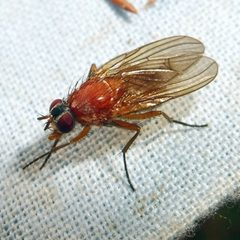
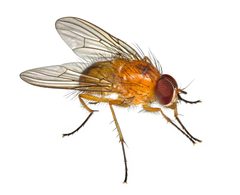
2Thricops is a of true flies in the Muscidae, established by Rondani in 1856. in this genus are found in temperate regions of the Northern Hemisphere, including Europe, Scandinavia, and North America. At least one species, Thricops diaphanus, exhibits a in highland of central Japan, where it has been studied as a potential glacial relict species. The genus belongs to the tribe Azeliini within the Muscinae.
Pronunciation
How to pronounce Thricops: /ˈθraɪkɒps/
These audio files are automatically generated. While they are not always 100% accurate, they are a good starting point.
Images
Habitat
Subalpine coniferous forests in highland regions; at least one occupies high-elevation in central Japan with seasonal vertical microdistribution patterns.
Distribution
Northern Hemisphere temperate regions: documented from Denmark, Norway, Sweden, Vermont (USA), and highlands of central Japan.
Seasonality
Seasonal activity patterns documented for Thricops diaphanus in central Japan, with vertical microdistribution changing seasonally; no seasonal altitudinal observed.
Life Cycle
Thricops diaphanus has been observed to have a (one per year) at highlands in central Japan, determined through ovarian examination of wild-caught specimens. This contrasts with multivoltine cycles reported for the same in Europe.
Behavior
No seasonal altitudinal between highlands and lowlands has been observed in studied . Seasonal modification of vertical microdistribution within subalpine forests appears related to fungi distribution.
More Details
Glacial relict hypothesis
Thricops diaphanus in central Japan has been suggested as a glacial relict based on its highland distribution and pattern.