
Fucellia thinobia
(Thomson, 1869)
Cormorant Fly, Kelp Fly
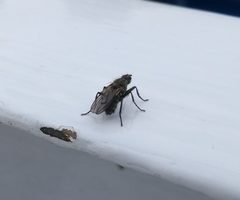
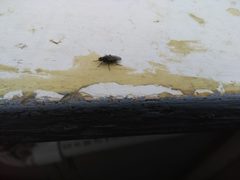
Fucellia thinobia is a small fly in the Anthomyiidae known primarily from Alcatraz Island in San Francisco Bay. Despite being commonly called a "kelp fly," it has no association with kelp; rather, it develops in purge-soaked soil beneath dead cormorants in island rookeries. The was the focus of intensive research by UC Davis forensic entomologist Robert Kimsey beginning in 2007, who demonstrated its strict dependence on cormorant carcass sites. Its localized distribution and specialized breeding make it a notable example of island among dipterans.
Pronunciation
How to pronounce Fucellia thinobia: //fjuːˈsɛliə θɪˈnoʊbiə//
These audio files are automatically generated. While they are not always 100% accurate, they are a good starting point.
Identification
The has been referred to as both "kelp fly" and "cormorant fly," though the latter name more accurately reflects its . It belongs to the Anthomyiidae, a group of small to medium-sized flies often resembling house flies but with distinct chaetotaxy and genitalia. Specific external diagnostic features for F. thinobia are not documented in the provided sources. The fly's association with cormorant rookeries and its absence from kelp distinguishes it from other Fucellia species, some of which are genuinely associated with marine .
Images
Habitat
Restricted to Alcatraz Island, where it inhabits soil soaked with purging fluids from decomposing cormorant carcasses beneath cormorant rookeries. The is created by three cormorant (Brandt's cormorant, pelagic cormorant, and double-crested cormorant) that breed on the island.
Distribution
Known only from Alcatraz Island in San Francisco Bay, California. The has not been documented from any other location.
Seasonality
activity peaks in late August through October, coinciding with the period when visitor complaints about fly nuisance reached maximum levels.
Behavior
exhibit persistent attraction to humans, landing on people with apparent avidity. This generated substantial complaints from island visitors and staff, who described the flies as treating people "as if they were rotten meat." The behavioral of larval stages remains unstudied.
Ecological Role
Functions as a decomposer within the cormorant rookery , processing purging fluids and soft tissues from cormorant carcasses. Its role in the broader island or in nutrient cycling has not been quantified.
Human Relevance
Generated significant nuisance complaints from Alcatraz Island visitors and National Park Service staff due to landing persistently on humans. The became the subject of the first systematic survey of Alcatraz flies, conducted by Robert Kimsey and Bruce Badzik beginning in 2007. Research on this fly contributed to broader understanding of island and applications.
Similar Taxa
Misconceptions
The "kelp fly" is erroneous for this . As demonstrated by Kimsey's research, F. thinobia has no biological connection to kelp; this name likely arose from superficial association with the marine environment of Alcatraz Island. The accurate common name is "cormorant fly."