
Fucellia
Robineau-Desvoidy, 1842
seaweed flies
Species Guides
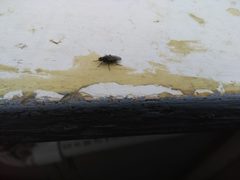
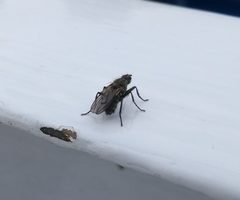
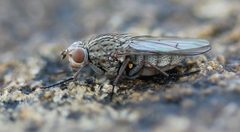
5Fucellia is a of true flies (Diptera) in the Anthomyiidae, commonly known as seaweed flies. The genus comprises at least 20 described that inhabit marine and coastal environments, particularly in association with seaweed. Several species have been studied for their potential use in aquaculture feed due to their profiles and protein content.
Pronunciation
How to pronounce Fucellia: /fjuˈsɛliə/
These audio files are automatically generated. While they are not always 100% accurate, they are a good starting point.
Images
Habitat
Marine and coastal saline , including intertidal zones and brackish coastal areas. are closely associated with seaweed substrates, including brown seaweed (Fucus spp.), green seaweed (Ulva spp.), and red seaweed.
Distribution
Europe: recorded from the Polish Baltic coast, Denmark, Norway, and Sweden. The appears to have a primarily northern European coastal distribution, though exact range limits are not well documented.
Host Associations
- Aleochara sulcicollis - Rove beetle (Coleoptera: Staphylinidae) that parasitizes Fucellia rufitibia
Life Cycle
Complete (holometabolous) with , larval, pupal, and stages. Laboratory rearing studies indicate development can occur on multiple seaweed substrates, with Fucus sp. supporting higher rates of completed compared to fish processing waste or non-marine substrates.
Ecological Role
Serves as prey and for insects in intertidal . Larvae contribute to nutrient cycling in coastal marine through decomposition of seaweed material.
Human Relevance
Fucellia maritima has been investigated as a potential alternative protein source for marine aquafeeds. Wild-caught contain 55-57% protein and 10-13% lipid content. The can accumulate docosahexaenoic acid (DHA, 22:6 n-3) when reared on fish processing waste, addressing a nutritional gap in terrestrial insect meals.
Sources and further reading
- BugGuide
- Wikipedia
- GBIF taxonomy match
- iNaturalist taxon
- NCBI Taxonomy
- Catalogue of Life
- Genus Fucellia (Diptera: Anthomyiidae) in the saline habitats of the Polish coast
- Biochemical profile of the native seaweed fly Fucellia maritima (Haliday, 1838) (Diptera: Anthomyiidae) reared on five different substrates
- First Host Record for the Parasitoid Rove BeetleAleochara sulcicollisMannerheim, 1843 (Coleoptera: Staphylinidae) on the Intertidal Kelp Fly,Fucellia RufitibiaStein, 1910 (Diptera: Anthomyiidae)
- Fatty Acid Profile and Escherichia coli and Salmonella sp. Load of Wild-Caught Seaweed Fly Fucellia maritima (Haliday, 1838) (Diptera: Anthomyiidae).