
Dichaeta caudata
(Fallén, 1813)
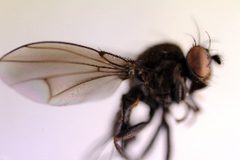
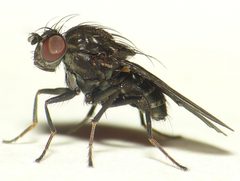
Dichaeta caudata is a shore fly in the Ephydridae, first described by Fallén in 1813. The develops in decaying organic matter, with larvae feeding on decomposing plant material. are commonly found in moist , particularly pond margins and other humid situations. The species is recorded from the Palearctic region, with confirmed presence in Denmark, Norway, and Sweden.
Pronunciation
How to pronounce Dichaeta caudata: /dɪˈkiːtə kaʊˈdɑːtə/
These audio files are automatically generated. While they are not always 100% accurate, they are a good starting point.
Identification
Male bears 8-10 hairs. with tergite IV having 8-16 marginal macrochaetes. Female tegument shining black with normal chaetotaxy. Wing with transverse MA2c slightly angled; two subequal costal spines present. Body length 4-4.25 mm.
Images
Habitat
Moist near decaying organic matter; larval development occurs in decomposing plant material. found on pond margins and in other humid situations.
Distribution
Palearctic region. Confirmed present in Denmark, Norway, and Sweden.
Seasonality
activity observed from May to September.
Diet
Larvae feed on decomposing plant material.
Life Cycle
, three larval instars, pupa, .
Ecological Role
Decomposer in decaying organic matter systems.
Sources and further reading
- BugGuide
- GBIF taxonomy match
- iNaturalist taxon
- Catalogue of Life
- Southernmost crocodile newt record is a threatened new species |
- Simplified method to survey amphibians will aid conservation | Blog
- New to science newts from Vietnam with an important message for Biodiversity Day 2020 | Blog
- Biology and Immature Stages of Dichaeta caudata (Diptera: Ephydridae)1
- A Revision of the Species of the Genus Dichaeta Meigen (Diptera: Ephydridae)