
Dichaeta
Meigen, 1830
Species Guides
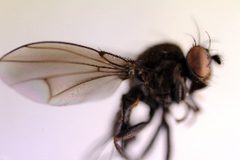
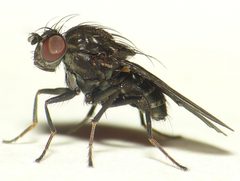
1Dichaeta is a of shore flies ( Ephydridae, tribe Notiphilini) established by Meigen in 1830. The genus was historically treated as a subgenus of Notiphila but was reinstated as a valid genus following phylogenetic analysis. It comprises five recognized , including the widespread D. caudata. The genus is characterized by distinctive male terminalia structures used in species identification.
Pronunciation
How to pronounce Dichaeta: //daɪˈkiːtə//
These audio files are automatically generated. While they are not always 100% accurate, they are a good starting point.
Identification
Distinguished from the closely related Notiphila by features of the male terminalia, particularly structures of the hypandrium, surstylus, and phallus. The genus is the sister group to Notiphila sensu lato. -level identification requires examination of male genitalic structures; detailed illustrations and descriptions are available in taxonomic revisions.
Images
Habitat
Associated with shallow aquatic and semi-aquatic , particularly pools containing decomposing organic matter. Larvae develop in muddy, organically enriched substrates with decaying vegetable material.
Distribution
recorded from the Nearctic Region (including New Jersey and Idaho), the Palaearctic Region (including the Russian Far East), and China. Detailed distribution maps available for the Nearctic fauna.
Diet
Larvae are scavengers that feed on decomposing organic matter, particularly decaying vegetable material and associated microorganisms.
Life Cycle
Complete with , three larval instars, and pupal stages. Development occurs in aquatic to semi-aquatic conditions in decomposing organic substrates. Oviposition on substrate surface or within decomposing organic material.
Behavior
Larvae are adapted to living in oxygen-poor, organically enriched environments. likely remain associated with larval for oviposition.
Ecological Role
Decomposer and scavenger in aquatic and semi-aquatic ; contributes to breakdown of organic matter in shallow, temporary pools and wetland situations.
Similar Taxa
- NotiphilaHistorically treated as congeneric; distinguished by male terminalia and phylogenetic position as sister group
More Details
Taxonomic History
Dichaeta was originally described as a by Meigen in 1830, later reduced to subgeneric status within Notiphila, and reinstated as a valid genus based on phylogenetic analysis showing it as the sister group to Notiphila sensu lato. The genus Notiphilini comprises only Dichaeta and Notiphila.
Species Composition
Five recognized : D. caudata (Fallén, 1813), D. ussurica Krivosheina (junior synonym N. transversa Walker), D. wirthi (new species from New Jersey), and D. zacki (new species from Idaho). D. choui Fan is a junior synonym of D. caudata.
Sources and further reading
- BugGuide
- Wikipedia
- iNaturalist taxon
- Catalogue of Life
- Pestalotiopsis dichaeta . [Descriptions of Fungi and Bacteria].
- A Revision of the Species of the Genus Dichaeta Meigen (Diptera: Ephydridae)
- Biology and Immature Stages of Dichaeta caudata (Diptera: Ephydridae)1
- MORPHOLOGICAL VARIABILITY AND LIFE CYCLE TRAITS OF THE TYPE SPECIES OF THE DIATOM GENUS CHAETOCEROS, C. DICHAETA1