
Notiphila
Fallén, 1810
shore flies
Species Guides
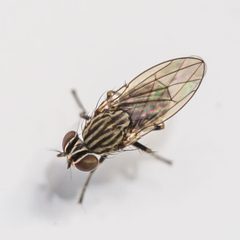
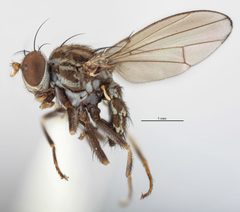
3Notiphila is a of shore flies ( Ephydridae) comprising at least 160 described . Species in this genus are primarily associated with wetland , particularly cattail marshes and riparian environments. Larvae are aquatic or semi-aquatic, developing in shallow water and saturated substrates where they feed on decaying organic matter and . Some species exhibit specialized root-piercing adaptations for accessing plant fluids.
Pronunciation
How to pronounce Notiphila: //nəˈtɪfɪlə//
These audio files are automatically generated. While they are not always 100% accurate, they are a good starting point.
Images
Habitat
Cattail marshes (Typha spp. wetlands) and riparian environments. Larvae develop in shallow water and saturated mud, particularly at the base of emergent vegetation such as cattail stems.
Distribution
Recorded from Denmark, Norway, and Sweden; likely more widespread given the large number of described and wetland preferences.
Diet
Larvae feed on decaying organic matter and in shallow water and mud. Some (e.g., Notiphila riparia) exhibit root-piercing to access plant root fluids.
Life Cycle
, three larval instars, pupa, . Larvae develop in shallow water and saturated mud at base of emergent vegetation. occurs within the same aquatic or semi-aquatic substrate.
Behavior
Larvae occur in dense at the base of cattail stems. rest on emergent vegetation such as cattail leaves and stems. Root-piercing possess specialized spiracular structures adapted for penetrating plant roots to access gas spaces.
Ecological Role
Decomposer and in wetland . Contributes to nutrient cycling in marsh through larval feeding on decaying organic matter.
Similar Taxa
- Other Ephydridae genera in cattail marshesMultiple shore fly share cattail marsh ; Notiphila distinguished by specific larval at cattail stem bases and documented root-piercing adaptations in some
More Details
Research limitations
Detailed biological information available for only a small number of (primarily N. riparia and N. olivacea). The majority of the at least 160 described species lack published studies on their , preferences, or feeding . Extrapolation from studied species to the entire should be treated cautiously.
Sources and further reading
- BugGuide
- Wikipedia
- GBIF taxonomy match
- NCBI Taxonomy
- Catalogue of Life
- The structure and behaviour of Notiphila riparia and Erioptera squalida, two root‐piercing insects
- Biology and Immature Stages of Two Species of Notiphila, with Notes on Other Shore Flies Occurring in Cattail Marshes (Diptera: Ephydridae)1