
Psilopa obscuripes
Loew, 1860
Psilopa obscuripes is a small shore fly in the Ephydridae, described by Loew in 1860. It belongs to a of flies commonly associated with saline or mineral-rich aquatic . The is poorly documented, with minimal published biological information and few verified observations.
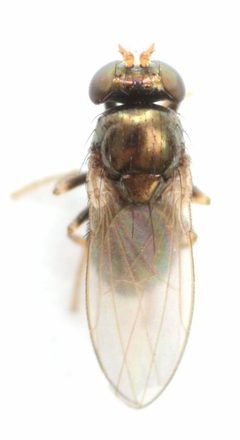
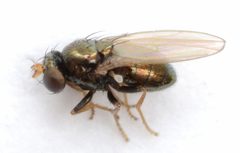
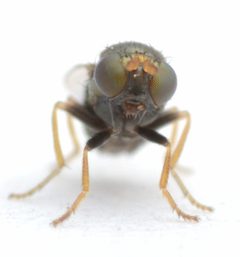
Pronunciation
How to pronounce Psilopa obscuripes: /ˈsaɪləpə ˌɑbskjʊˈripeɪz/
These audio files are automatically generated. While they are not always 100% accurate, they are a good starting point.
Identification
Distinguishing P. obscuripes from requires examination of male genitalia and subtle leg coloration differences. The specific epithet "obscuripes" refers to darkened legs, a trait used to separate it from paler-legged Psilopa . Reliable identification depends on reference to Loew's original description and subsequent taxonomic revisions.
Images
Habitat
Members of Psilopa are typically found in saline, alkaline, or mineral-enriched wetland including salt marshes, mineral springs, and evaporative pond margins. The specific microhabitat preferences of P. obscuripes have not been independently documented.
Distribution
Described from North American material; precise type locality and contemporary range boundaries remain insufficiently documented. GBIF records suggest scattered North American occurrences, though verification of identifications is needed.
Similar Taxa
- Psilopa marginellaOverlaps in preference and geographic range; distinguished by leg coloration and male genitalic structure
- Psilopa nitidulaSimilar size and general ; requires dissection for definitive separation
More Details
Taxonomic note
The Psilopa has undergone repeated revision, and boundaries remain problematic for several . P. obscuripes may be subject to future synonymy or revalidation depending on comprehensive revision of Nearctic Ephydridae.
Data deficiency
Only three observations recorded in iNaturalist as of source date, reflecting either genuine rarity, identification difficulty, or lack of survey effort in appropriate .