
Discomyza incurva
(Fallén, 1823)
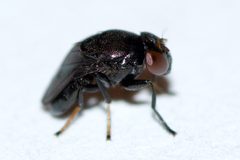
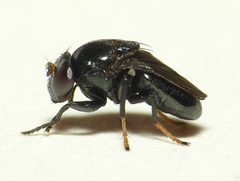
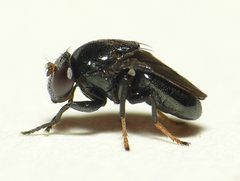
Discomyza incurva is a small shore fly in the Ephydridae, measuring 2.5–3 mm in length. It is distributed across the Palearctic region, including Europe (particularly southern Europe), North Africa, and parts of western Asia. The is active during summer months, with records from July through September. It inhabits grassland and has been documented as a of land snails in the Helix.
Pronunciation
How to pronounce Discomyza incurva: /dɪskoʊˈmaɪzə ɪnˈkɜːrvə/
These audio files are automatically generated. While they are not always 100% accurate, they are a good starting point.
Identification
The can be distinguished from other Discomyza species by its curved (incurved) wing venation, as implied by the specific epithet. Detailed diagnostic features for field identification are not available in the provided sources. Examination of male genitalia is likely required for definitive identification, as is typical for many Ephydridae species.
Images
Appearance
Small fly, 2.5–3 mm in body length. Specific morphological details beyond size are not documented in available sources.
Habitat
Grasslands. Specific microhabitat preferences within grassland are not documented.
Distribution
Palearctic region: Europe (widespread, especially southern Europe), North Africa, and western Asia. Specific country records include Belgium, Denmark, Norway, Sweden, Great Britain, Germany, Switzerland, Austria, Czech Republic, Bulgaria, Albania, Algeria, Cyprus, and Senegal. The has also been recorded in Canada, likely representing an introduced or vagrant occurrence.
Seasonality
Active from July through September. The appears to be or with a restricted summer period in temperate regions.
Host Associations
- Helix spp. - D. incurva is a of land snails in the Helix. The specific nature of the parasitic relationship (e.g., whether it involves larval development within the or other forms of ) is not detailed in available sources.
Ecological Role
As a of land snails, D. incurva may contribute to regulation of Helix . Its role in broader processes is not documented.
Human Relevance
No documented economic or medical significance. The is of potential interest to malacologists and dipterists studying snail- relationships.
Similar Taxa
- Other Discomyza speciesMembers of the Discomyza share similar small size, preferences, and general . D. incurva is distinguished by its curved wing venation and specific male genitalia.
- Other EphydridaeMany shore flies in the Ephydridae are similar in size and occur in comparable . Identification to level typically requires examination of wing venation and genitalic structures.
More Details
Taxonomic history
The was described by Fallén in 1823. The Discomyza belongs to the tribe Discomyzini within the Ephydrinae of the Ephydridae.
Research needs
Detailed studies of the , larval , and specific nature of the parasitic relationship with Helix snails are lacking. The mechanism of location and the impact on host remain unstudied.
Sources and further reading
- BugGuide
- Wikipedia
- GBIF taxonomy match
- iNaturalist taxon
- NCBI Taxonomy
- Catalogue of Life
- Lepidoptera | Beetles In The Bush | Page 7
- Uncategorized | Blog - Part 41
- Pensoft blog - Part 147
- Bibliography | Beetles In The Bush
- The giant cockroach genus Pseudophoraspis expands to the north with 3 new species | Blog