
Steganinae
Hendel, 1917
Genus Guides
8- Amiota
- Cacoxenus(Houdini fly)
- Hyalistata
- Leucophenga
- Phortica
- Pseudiastata
- Rhinoleucophenga
- Stegana(vinegar flies)
Steganinae is the smaller of two in the fruit fly Drosophilidae, established by Hendel in 1917. The subfamily is monophyletic but lacks a single diagnostic morphological character distinguishing it from the larger Drosophilinae. Members display diverse feeding , with some exhibiting zoophilic habits unusual for drosophilid flies. The subfamily includes approximately 350 described species across multiple tribes and subtribes, though phylogenetic relationships remain partially unresolved.
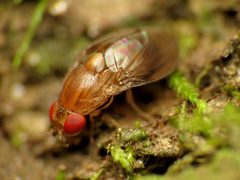
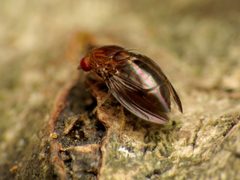
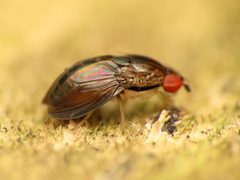
Pronunciation
How to pronounce Steganinae: //stɛˈɡænɪniː//
These audio files are automatically generated. While they are not always 100% accurate, they are a good starting point.
Identification
Cannot be distinguished from Drosophilinae by any single morphological character; identification requires examination of multiple character combinations. Molecular identification facilitated by mitochondrial COI sequences, with mean variation of 8.1% within the . Phortica and Amiota are phylogenetically distinct based on molecular data.
Images
Habitat
Forest-associated; found in ranging from fermenting tree sap and decaying plant matter to fungal substrates. Some species associated with oak forests and rotting fungi.
Distribution
Widespread distribution with native European fauna; range of some expanding due to climate change.
Diet
Larvae feed on fermenting tree sap, decaying plant matter, and fungal substrates. Some exhibit zoophilic feeding, with documented cases of tear-feeding on mammals.
Host Associations
- Thelazia callipaeda - Phortica variegata transmits this ocular to mammals
- mammalian carnivores - including foxes, beech martens, wild cats, domestic dogs
- lagomorphs - tear-feeding documented
- humans - documented -borne transmission of Thelazia callipaeda
Life Cycle
Larvae develop in fermenting tree sap and decaying plant matter, including fungal substrates. Climate change and warmer winters support and range expansion in some .
Behavior
Strong olfactory documented in Phortica variegata, with males showing higher antennal responses to phenol, 3-octanone, and sulcatone. Behavioral sexual dimorphism in tear-feeding: only males feed on tears and , unique among known vector insects where zoophagy is typically female-linked or present in both sexes. Peripheral olfaction tuned to microbial volatile emissions rather than plant volatiles.
Ecological Role
of ocular nematosis caused by Thelazia callipaeda, affecting wildlife, domestic animals, and humans. Member of dipteran guild utilizing small- forest food resources including decaying plant matter and fungi.
Human Relevance
Medical and veterinary significance as of Thelazia callipaeda (oriental eyeworm), an emerging zoonotic . Growing need for attractant-based surveillance and control strategies due to increasing .
Similar Taxa
- DrosophilinaeThe only other in Drosophilidae; distinguished by combination of characters rather than single diagnostic feature
- Drosophila melanogasterWell-studied relative used for comparative olfactory studies; Steganinae show distinct antennal responses to microbial volatiles versus plant volatiles
More Details
Taxonomic composition
Contains two tribes: Steganini (subtribes Steganina and Leucophengina) and Gitonini (subtribes Gitonina, Acletoxenina, and unknown). Includes Stegana, Phortica, Amiota, Gitona, Cacoxenus, Leucophenga, and others. Some genera (Cacoxenus) appear in multiple subtribes, indicating taxonomic complexity.
Phylogenetic status
Molecular phylogenetic studies using COI sequences provide first molecular dataset for the . Strong support for Phortica as distinct from Amiota. Gitona distigma placed in unresolved position. Mean interspecific divergence ranges from 1.6% to 24.8%, with intraspecific variation 0-1%.
Olfactory ecology
Antennal olfaction tuned to microbial volatile emissions (anisole, ethyl propanoate, butyl propanoate, propyl acetate, 3-octanone, nonanal, decanal) rather than common plant alcohols and terpenoids. This suggests fungal and microbial substrates play important roles in .
Sources and further reading
- BugGuide
- Wikipedia
- iNaturalist taxon
- NCBI Taxonomy
- Catalogue of Life
- Molecular characterization and phylogenesis of Steganinae (Diptera, Drosophilidae) inferred by the mitochondrial cytochrome c oxidase subunit 1
- Olfactory responses of Phortica variegata (Drosophilidae, Steganinae) the emerging vector of Thelazia callipaeda (Rhabditida, Thelaziidae) to ecologically relevant volatiles